

Have you ever had a piece of furniture that’s been driving you crazy? For me, it was a wobbly table leg that threatened to ruin dinner parties and family gatherings. Fixing it was easier than I thought, and I’m excited to share my experience with you.
I found out that with a few simple tools and some patience, I could stabilize my table in just 5 easy steps. If you’re struggling with a similar issue, you’re not alone. Many of us have furniture that’s in need of some TLC. By following my guide, you’ll be able to enjoy a stable surface for your meals and activities. For more detailed instructions, you can also check out this helpful guide on how to fix a wobbly table.
Key Takeaways
- Assess the table’s stability before starting the repair.
- Gather the necessary tools to avoid delays.
- Tighten loose screws or bolts to secure the leg.
- Apply wood glue if the joints are loose.
- Test the table’s stability after completing the repairs.
Understanding the Problem: Why Is My Table Wobbly?
A wobbly table is more than a nuisance; it signals a deeper problem. When I faced this issue, I knew I had to find out why. This was key to solving the problem.
Common Causes of Wobbly Table Legs
Several reasons can make a table wobbly. Here are some common ones:
- Uneven flooring: Floors that are not level can cause tables to wobble.
- Loose joints: Over time, the joints in a table can become loose, leading to instability.
- Damaged legs: If a leg is damaged or broken, it can cause the table to wobble.
- Improper assembly: If a table is not assembled correctly, it may not be stable.
Identifying the cause is the first step towards a stable table. Knowing what’s causing the wobble helps you pick the right fix.
The Importance of a Stable Table
A stable table is not just convenient; it’s also a safety matter. A wobbly table can lead to accidents, like spills or injuries from it tipping over. Also, a stable table makes your dining or work experience better and uninterrupted.
Fixing a wobbly table does more than just fix furniture. It improves your experience with it. Whether for dining, working, or displaying, a stable table is vital.
Tools and Materials Needed
To fix a wobbly table leg, you’ll need some basic tools and materials. We’ll cover what you need in this section. Having everything ready will make the job easier and faster.
Basic Tools to Get Started
First, gather a few essential tools. You’ll need:
- Screwdriver (both flathead and Phillips)
- Adjustable wrench or socket wrench
- Clamps (for holding pieces together)
- Wood glue (for reinforcing joints)
- Shims (for leveling the table)
Recommended Materials for Repair
You might also need extra materials, depending on the damage. These include:
- Wood filler (for filling gaps or holes)
- Sandpaper (for smoothing out surfaces)
- Paint or varnish (to match the original finish)
- Replacement parts (if the damage is extensive)
| Tool/Material | Purpose |
|---|---|
| Screwdriver | Tightening loose screws |
| Adjustable wrench | Tightening bolts and nuts |
| Clamps | Holding pieces together during repair |
| Wood glue | Reinforcing joints |
| Shims | Leveling the table |
With these tools and materials ready, you’re set to stabilize your table. This will ensure a successful DIY furniture repair.
Assessing the Wobbliness
Checking if your table wobbles is key to fixing it. First, find out which leg is the problem.
How to Identify Which Leg Is the Problem
Make sure your floor is level before you start. Then, rock the table gently back and forth. Watch each leg; the one not touching the ground or moving too much is the issue.
Try this test: put a small piece of paper or shim under each leg. If it slides out easily, that leg isn’t holding weight right.
Testing for Stability
After finding the bad leg, test the table’s stability. Push down on it and then let it go. If it wobbles a lot, you might need to change your repair plan.
For a better check, use a level tool. This will show if your table is perfectly level. Knowing this helps you figure out how much to adjust.
| Leg Status | Possible Cause | Action |
|---|---|---|
| One leg not touching the ground | Uneven floor or leg length discrepancy | Use shims to level the table |
| Legs unevenly touching the ground | Worn-out or damaged legs | Repair or replace the damaged leg |
| Table wobbles when pushed | Loose joints or screws | Tighten screws and bolts |
By carefully checking the wobble and finding the cause, you can fix your table right. This makes sure it’s stable and strong.
Tightening Screws and Bolts
To make your table stable, check and tighten loose screws and bolts. This simple step can fix a wobbly table leg. When I fixed my table, I was amazed at how well it worked.
Finding Loose Connections
First, find which screws and bolts are loose. Inspect each joint and leg of the table carefully. Look for signs of looseness or wear. Sometimes, loose parts are hidden under caps or covers, so check well.
Mark any loose connections you find. This makes it easier to find them when tightening. It ensures you don’t miss any during the tightening process.
Step-by-Step Tightening Process
Now, you know where to tighten. Here’s how to do it:
- Use the right screwdriver or wrench for the job.
- Tighten screws or bolts in a star pattern for tables with multiple legs. This spreads the force evenly.
- Check if the table is stable after tightening each one. This helps you know if you’ve fixed it or need more work.
After tightening, test your table by gently rocking it. If it’s not stable, you might need to tighten more or use shims.
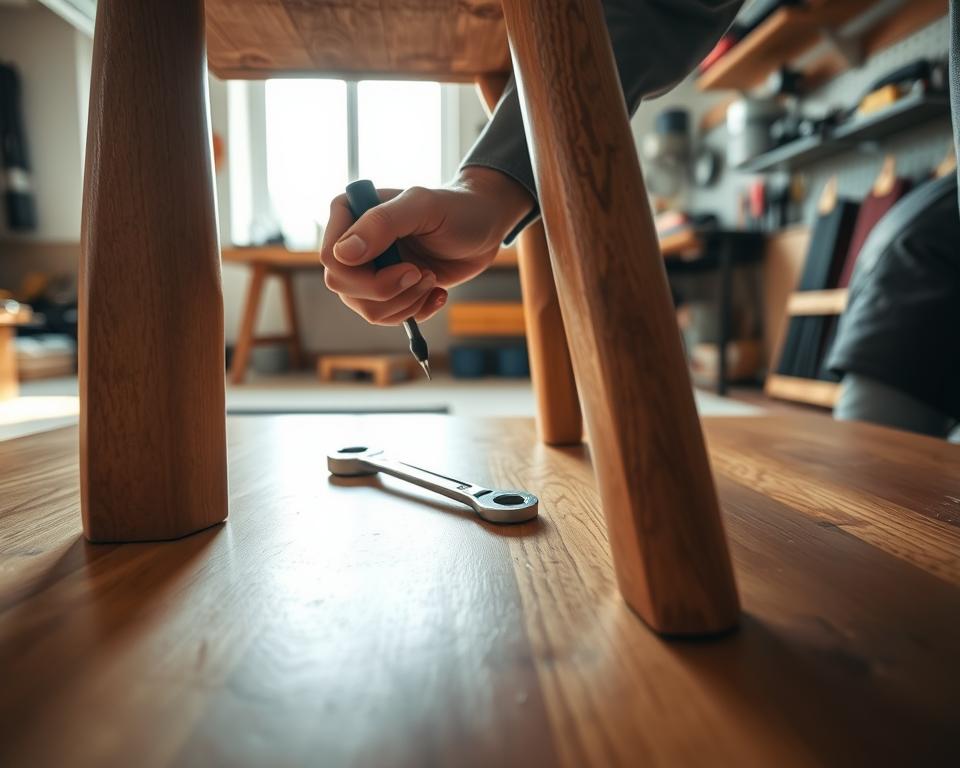
Tightening screws and bolts is key to table stability. By following these steps, you can often fix your table quickly. Regular checks can stop wobbliness and keep your table stable.
Using Shims for Stability
Fixing a wobbly table doesn’t always need big repairs. Sometimes, just using shims can solve the problem quickly and effectively.
What Are Shims and Why Use Them?
Shims are thin, wedge-shaped pieces made of wood, plastic, or metal. They’re used to fill small gaps or adjust objects. For a wobbly table leg, shims can level the table by filling the gap between the leg and the floor. They’re simple to use and require little effort.
Benefits of Using Shims:
- Easy to implement without needing advanced DIY skills
- Minimal cost, as shims can often be made from readily available materials
- Provides a quick fix to stabilize the table
How to Properly Use Shims
To use shims effectively, you need to level the table properly. Here’s a step-by-step guide:
- Identify the wobbly leg and determine the size of the gap between the leg and the floor.
- Cut a shim to the appropriate size. The material should be sturdy enough to support the table.
- Slide the shim into the gap, ensuring it’s properly seated.
- Test the table for stability. If necessary, adjust the shim or add additional shims until the table is level.
Tip: Always check the table’s stability after adding shims. Too many shims can cause imbalance.
By following these steps, you can fix a wobbly table leg with shims. This makes your furniture stable and secure.
Fixing Broken or Damaged Legs
Fixing broken or damaged table legs is key to making your table stable again. A damaged leg can make the table wobble, making it hard to use. I’ll show you how to spot damage and what repair options you have.
Identifying Damage in Table Legs
First, check how bad the damage is. Look for wear, cracks, or breaks in the legs. Sometimes, damage is hidden under finish or paint. Make sure to check for loose joints too.
To check the legs well, follow these steps:
- Look for any visible cracks or breaks in the legs.
- Check if the joints are loose by gently rocking the table.
- See if the finish or paint shows any stress or cracks.
Repair Options for Different Types of Damage
The repair needed depends on the damage’s type and extent. For small cracks or loose joints, just tightening or using wood glue might work. But for big damage, like a broken leg, you might need to replace it or do more repairs.
Here are some common fixes:
| Type of Damage | Repair Option |
|---|---|
| Minor Cracks | Wood glue and clamping |
| Loose Joints | Tightening screws or bolts |
| Broken Leg | Replacement or extensive woodworking repair |
For more detailed help on fixing wobbly dining table legs, check out this resource. It has step-by-step guides.
Replacing the Leg
When a table leg can’t be fixed, replacing it is the best choice for a wobbly table fix. This might seem scary, but it’s a simple home improvement task. It can make your table stable and last longer.
When Is Replacement Necessary?
Deciding if a table leg needs to be replaced depends on the damage. If it’s cracked, broken, or very worn out, it’s time for a new one. Look out for these signs:
- The leg can’t be tightened or shimmed anymore.
- There are visible cracks or breaks.
- The table is unstable even after trying to fix it.
In these cases, getting a new leg is a simple fix. It makes your table stable and safe again.
Choosing the Right Replacement Leg
Finding the right replacement leg involves a few things. You need to think about material, size, and style. Here are some tips:
- Choose a leg made of the same material as the original.
- Make sure the new leg is the right size and height.
- Pick a style that fits with your table’s design.
By picking the right leg, you can make your table stable and look good again. This completes your home improvement project.
Preventive Measures for the Future
After fixing your wobbly table leg, it’s time to keep it stable. Staying stable isn’t just about fixing problems. It’s about preventing them from happening in the first place.
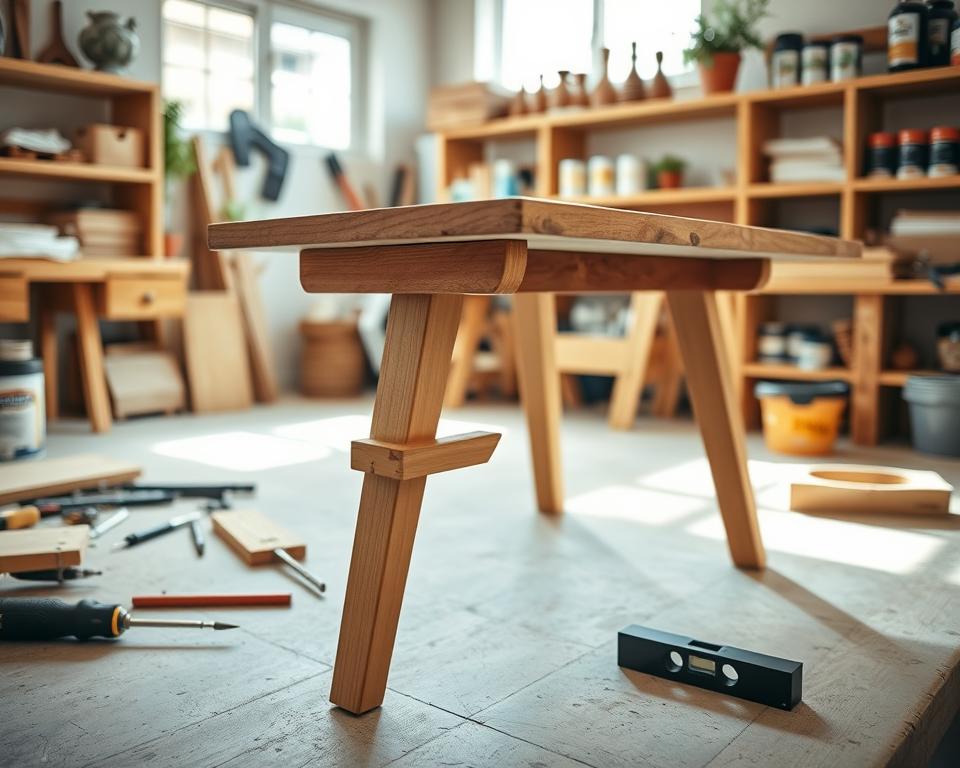
Tips for Maintaining Table Stability
To keep your table stable, check and maintain its legs and joints often. Here are some woodwork tips to help:
- Check for loose screws or bolts and tighten them as needed.
- Use felt pads on the legs to prevent scratching and improve stability on uneven floors.
- Avoid placing excessive weight on the table, as this can cause it to become unstable.
- Consider using shims or adjustable feet to level the table if your floor is uneven.
Regular Checkups for Your Furniture
Regular checkups are key for your furniture’s long life. By inspecting your table and other furniture, you can spot problems early.
Focus on these areas during your checkups:
- The condition of the legs and joints, looking for signs of wear or damage.
- The stability of the furniture on the floor, checking for any signs of unevenness.
- The tightness of all screws, bolts, and other fasteners.
By following these furniture stabilization tips and keeping up with regular checkups, your table will stay stable and useful for years.
Final Adjustments for a Level Table
The last step in fixing my wobbly table is to make sure it’s level. Table stability is key for both function and safety. I will use a level tool and adjust the furniture feet as needed.
Using a Level to Ensure Proper Height
A level tool is vital for checking if the table surface is even. I put the level on the table and look at the bubble. If it’s in the middle, the table is level. If not, I need to make adjustments.
Adjusting Height Using Furniture Feet
To change the height, I check the furniture feet. If the table is not even, I find out which feet need tweaking. Some feet can be adjusted by screwing them in or out.
Here’s a simple table to show how to adjust:
| Adjustment Needed | Action |
|---|---|
| Table tilts to the left | Lower the left feet or raise the right feet |
| Table tilts to the right | Lower the right feet or raise the left feet |
| Table tilts forward | Lower the front feet or raise the back feet |
| Table tilts backward | Lower the back feet or raise the front feet |
By following these steps and using the right tools, I can make my table stable and level. This final step is important for a quick fix. It makes sure my table is safe and works well.
Conclusion: Enjoying My Stable Table
After fixing my table, I’m really happy with the result. It no longer wobbles. The whole process was easy, needing just a few tools and materials. I feel proud of what I accomplished, thanks to this article.
My Repair Experience
Fixing my table had a few small bumps, but it was mostly smooth. Tightening screws and using shims helped a lot. In the end, my table is now perfectly level.
Take on the Challenge
I think you should try fixing your wobbly table too. It’s not hard with the right tools and a bit of patience. A stable table makes a big difference in how it looks and works.