

A leaky faucet is not just annoying; it can also waste a lot of water. This can lead to higher utility bills. A single dripping faucet can waste up to 20 gallons of water each day.
Fixing a leaky faucet is a simple DIY task. It can save you money and help save water. In this article, I will show you 5 easy steps to fix your leaky faucet. By following these steps, you’ll find the leak, replace parts, and fix your faucet.
Key Takeaways
- Identify the source of the leak
- Turn off the water supply before starting the repair
- Replace worn-out faucet parts
- Use the right tools for the job
- Test your faucet after the repair
Understanding Your Leaky Faucet
Seeing a faucet leak can be frustrating and wasteful. It’s important to find out why it’s happening to fix it right. Knowing the cause is the first step to solving the problem.
Common Causes of Faucet Leaks
Faucet leaks usually come from parts that wear out or get damaged. Here are some common reasons:
- Worn-out O-rings or gaskets: These parts can break down, causing leaks.
- Loose or corroded valve seats: The valve seat is key and can wear out or rust, leading to leaks.
- Improperly installed or worn-out cartridges: Cartridges manage water flow. If they’re not set up right or get old, leaks happen.
Importance of Timely Repairs
Fixing a leaky faucet does more than just stop the drip. It saves water and prevents damage to your home. Quick fixes can:
- Save water: A single leak can waste a lot of water.
- Reduce your water bill: Fixing leaks means using less water and saving money.
- Prevent damage: Ignoring leaks can cause bigger plumbing problems and harm your home.
It’s vital to act fast when you see a faucet leak. Knowing how to fix it early can save you from expensive repairs later.
Tools You’ll Need for the Repair
To fix a leaky faucet smoothly, prepare the right tools and parts ahead of time. Having everything ready can make the job easier and less stressful.
Essential Hand Tools
Fixing a leaky faucet requires the right tools. You’ll need adjustable wrenches and basin wrenches for tightening and loosening parts. Also, screwdrivers (flathead and Phillips) are key for taking apart the faucet.
Don’t forget needle-nose pliers for tight spots and channel-type pliers (or locking pliers) for gripping small parts.
Recommended Parts and Replacements
The parts you need depend on your faucet type. Common replacements are O-rings, gaskets, and valve seats. For cartridge faucets, you might need a new cartridge.
Inspect your faucet’s parts to see what needs replacing. You can find faucet repair kits with all the parts you need.
Choose high-quality, compatible parts for a successful repair. This prevents future leaks. For Quick Faucet Repair Tips, check part numbers or ask a pro if unsure.
Step 1: Turn Off the Water Supply
To start fixing your leaky faucet, first find and turn off the water supply. This step is key to avoid water spills while you work.
Locating the Shut-Off Valve
The shut-off valve is usually found under the sink. It’s a knob or handle that you turn clockwise to stop the water. If you can’t find it, check your plumbing or the faucet’s manual.
Tips for Locating the Shut-Off Valve:
- Check under the sink for the valve.
- Look for a knob or handle that controls water flow.
- If you have a double sink, there might be two shut-off valves.
Alternative Water Shut-Off Methods
If you can’t find the shut-off valve or it’s not working, there are other ways to stop the water. You can turn off the main water supply. This is usually near the water meter or where the water line enters your home.
Main Water Shut-Off Valve Locations:
| Location | Description |
|---|---|
| Near the water meter | Typically found outside your home, near the water meter. |
| Where the water line enters your home | Could be inside or outside, depending on your home’s setup. |
Step 2: Plug the Drain
First, turn off the water supply. Then, plug the drain to stop small parts from falling in. This step helps avoid frustration and saves time.
Why You Should Cover the Drain
Covering the drain is key. It keeps small parts like O-rings and washers from going down the drain. These tiny items can easily fall and cause more trouble.
By covering the drain, you keep all parts in sight. This makes fixing the faucet much easier.
Options for Drain Coverage
There are many ways to cover the drain. The choice depends on what you have nearby. Here are a few options:
- A drain plug
- A cloth or rag
- A specialized drain cover
Using a cloth or rag is often the easiest. Just place it over the drain to catch any parts that fall.
Choose a method that works for you. The main goal is to cover the drain well to avoid losing important parts.
Step 3: Disassemble the Faucet
First, turn off the water supply. Then, it’s time to take apart the faucet. This is key to finding and fixing the leak. Plumbing expert, Allen Smith, once said, “The key to a successful faucet repair is understanding its components and how they work together.”
Types of Faucets and Their Components
Faucets vary, like cartridge, ball-and-socket, and compression types. Each has its own parts to know before you start taking it apart.
- Cartridge faucets have a cartridge that controls water flow and temperature.
- Ball-and-socket faucets use a rotating ball to manage water flow.
- Compression faucets rely on separate handles for hot and cold water, using compression to control flow.
Knowing these parts is key to taking apart and putting back together your faucet.
Tips for Taking Photos During Disassembly
Photos during disassembly help a lot when you put it back together. Here are some tips:
- Take clear, well-lit photos of each component before removing it.
- Capture the orientation and positioning of parts relative to each other.
- Document any screws, clips, or other fasteners used to hold parts together.
As
“A picture is worth a thousand words,”
photos can really help avoid frustration when reassembling.
By following these steps and tips, you’ll be well on your way to fixing that leaky faucet and stopping the drip for good.
Step 4: Inspect the Components
Checking the faucet parts is key to finding the leak’s source. You need to look at each part for wear, damage, or mineral buildup. These can cause leaks.
Signs of Wear and Tear
Look for signs of wear and tear when checking the parts. These include:
- Cracked or broken parts
- Worn-out O-rings or gaskets
- Mineral deposits or scaling
- Corrosion on metal parts
These problems can often be seen with a quick look. For harder issues, you might need to test parts or get a Plumbing Leak Fix from a pro.
Identifying Replaceable Parts
After finding worn or damaged parts, see if they can be swapped out. Common parts to replace are:
| Part | Description | Replacement Tip |
|---|---|---|
| O-rings | Seal the stem or handle | Apply silicone-based lubricant |
| Gaskets | Seal between faucet parts | Ensure proper alignment |
| Cartridge | Controls water flow | Follow manufacturer’s instructions |
Swapping these parts can fix the leak, giving you a Quick Faucet Repair Tip. Make sure to get the right parts for your faucet.
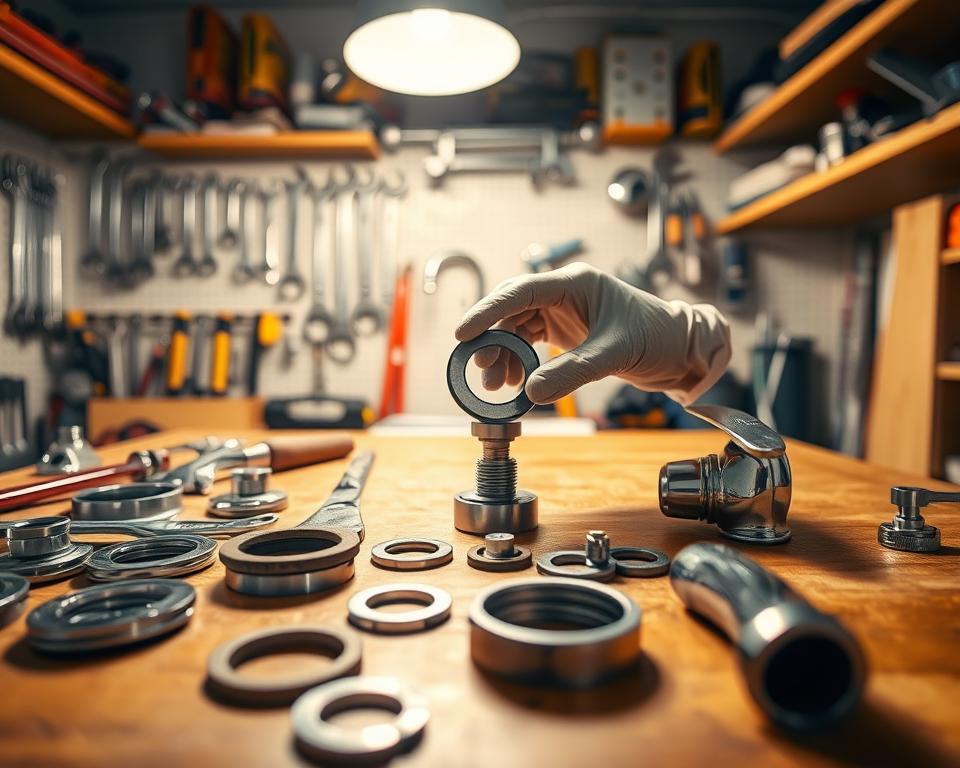
By carefully checking the faucet parts and replacing any damaged ones, you can fix the leak. This will make your faucet work right again.
Step 5: Reassemble and Test the Faucet
The final step in our faucet repair guide is to put everything back together and test it. This step is key to make sure all parts are in place and working right.
Proper Reassembly Techniques
To reassemble the faucet, start by reversing the steps you took to take it apart. Make sure all parts are tightened well, but don’t overdo it. This can harm the faucet. If you replaced any parts, make sure they fit right according to the maker’s guide.
Tip: Use the photos you took when you took it apart to help you put it back together. These pictures can be very helpful in making sure everything is correctly reassembled.
Testing for Leaks
After you’ve put the faucet back together, it’s time to check for leaks. Turn on the water and check the faucet under both hot and cold water. Look for any signs of leaks at the connections and joints.
Run the faucet for a few minutes to make sure the leak is fixed and there are no other problems. If you see any leaks, tighten the area or replace the part if needed.
By following these steps, you should be able to fix your leaky faucet using the Faucet Drip Repair Guide. Regular checks and quick fixes can save you money and prevent bigger plumbing problems.
If you’re dealing with a tough faucet issue or don’t feel like fixing it yourself, think about getting a professional plumber to Repair Leaking Tap for you.
When to Call a Professional
Knowing when to call a professional for faucet repairs can save you time, money, and stress. DIY repairs can be cost-effective and empowering. But, some situations need a skilled plumber’s expertise.
Signs That Repair is Not Enough
If you’ve tried to fix your leaky faucet but it keeps leaking, it might be more complex than you thought. Other signs you need a pro include:
- Multiple leaks or drips from different parts of the faucet
- Low water pressure or inconsistent flow
- Visible signs of water damage or mineral buildup
- Faucet handle or cartridge issues that you can’t resolve
Finding a Reliable Plumber
When you decide to call a professional, finding a reliable plumber is key. Here are some tips to help you choose the right one:
| Criteria | Description | Importance Level |
|---|---|---|
| Licensing and Certification | Ensure the plumber is licensed and certified to work in your state | High |
| Experience | Look for plumbers with experience in handling faucet repairs | High |
| Customer Reviews | Check online reviews to gauge customer satisfaction | Medium |
| Price Quotes | Get multiple quotes to compare prices and services | Medium |
| Warranty and Guarantee | Ask about warranty and guarantee policies for their work | High |
By knowing when to call a professional and how to find a reliable plumber, you can fix your faucet issues efficiently and effectively.
Preventing Future Leaks
To avoid the frustration of a leaky faucet, regular maintenance is key. By taking a few simple steps, you can ensure your faucet remains in good working condition.
Regular Maintenance Tips
Regular maintenance is essential for preventing leaks. This includes checking your faucet regularly for signs of wear and tear, such as mineral buildup or worn-out parts. Cleaning your faucet regularly can also help prevent leaks by removing any debris that might cause issues.
- Check for mineral buildup and clean as necessary.
- Inspect O-rings and gaskets for signs of wear.
- Tighten any loose parts to prevent leaks.
As Benjamin Franklin once said, “An investment in knowledge pays the best interest.” Investing time in maintaining your faucet can save you money and hassle in the long run.
Choosing Quality Fixtures
Choosing quality fixtures is another key step in preventing future leaks. High-quality faucets are designed to last longer and perform better, reducing the likelihood of leaks. When selecting a faucet, look for brands known for their durability and quality.
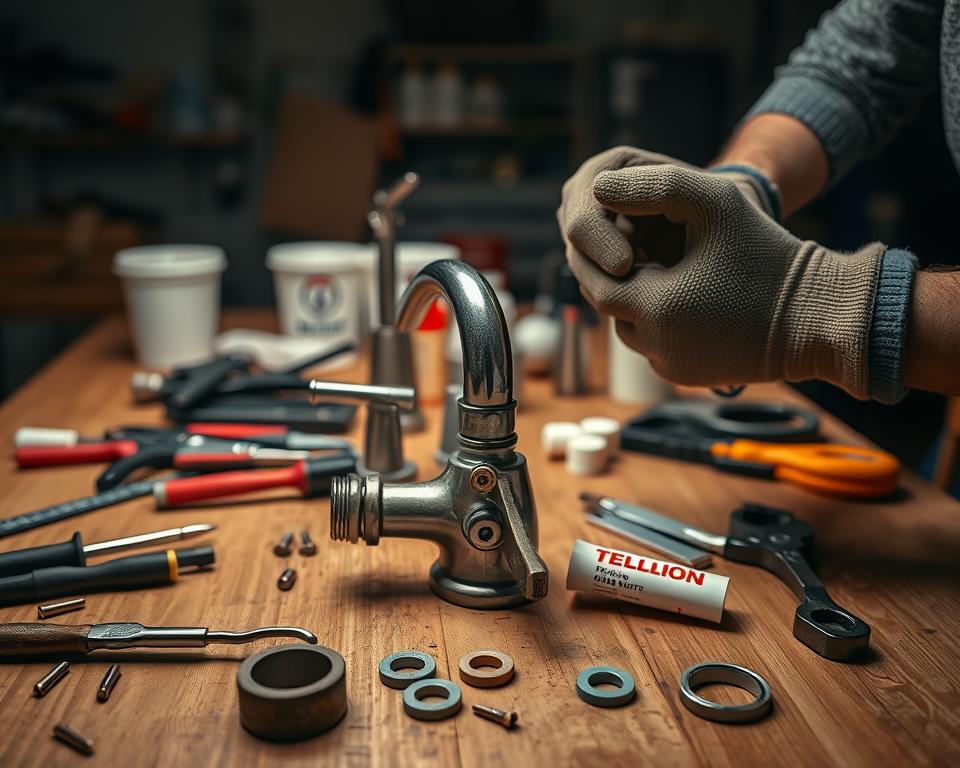
According to a study, faucets with ceramic discs tend to last longer than those with rubber gaskets. “Quality is not just about making something that lasts; it’s about making something that performs well over time,” as noted by a leading manufacturer.
“The quality of a faucet is directly related to its longevity and performance.”
By following these tips and choosing the right fixtures, you can significantly reduce the risk of future leaks and ensure your faucet continues to function properly.
Additional Resources for Home Repair
To improve your home repair skills, check out these extra resources. Whether you’re experienced or new, these tools will help with many tasks.
Online Tutorials
Online tutorials are great for learning at home. Sites like YouTube, Home Depot, and This Old House have lots of videos and guides. They cover topics like plumbing leak fix and fixing faucets.
Some top online resources include:
- YouTube DIY channels
- Home improvement websites
- Manufacturer’s websites for specific product guidance
Recommended Home Repair Books
If you like books, they’re a great resource. Home repair books offer detailed instructions, diagrams, and photos. They help with complex repairs.
Some top books are:
- “The Homeowner’s Guide to Plumbing” by various authors
- “Home Repair for Dummies” by Dan Ramsey
- “Complete Plumbing for Dummies” by Dan Ramsey
Here’s a table comparing popular home repair books:
| Book Title | Author | Focus Area |
|---|---|---|
| The Homeowner’s Guide to Plumbing | Various Authors | Plumbing Repairs |
| Home Repair for Dummies | Dan Ramsey | General Home Repair |
| Complete Plumbing for Dummies | Dan Ramsey | Plumbing Systems |
Using these resources will make you more confident in fixing repair leaking tap issues and other tasks.
Common Myths About Faucet Repairs
Before you start fixing your faucet, it’s key to know what’s real and what’s not. Many people think wrong about faucet repairs. This can lead to more problems or even damage.
Debunking Popular Misconceptions
Some think you need a pro to fix faucets. But, many fixes are simple DIY tasks. For example, tightening loose parts or swapping out old O-rings is easy for anyone.
Another myth is that all faucet leaks are the same. But, leaks can come from different problems like bad seals, loose parts, or broken cartridges. Knowing the cause is key to fixing it right.
Understanding Your Faucet Better
To fix your faucet well, you need to know what’s inside. Faucets have handles, stems, O-rings, and cartridges. Knowing these parts helps you find and fix problems.
| Faucet Component | Common Issue | Quick Fix |
|---|---|---|
| O-Rings | Wear and tear leading to leaks | Replace with new O-rings |
| Faucet Cartridge | Damage or mineral buildup causing leaks | Clean or replace the cartridge |
| Handles/Stems | Loose or corroded parts | Tighten or replace handles/stems |
Knowing these myths and your faucet’s parts makes fixing it easier. For Quick Faucet Repair Tips and a detailed Faucet Drip Repair Guide, staying informed is key.
Frequently Asked Questions
Thinking about repairing a leaky faucet? You might have questions about how to do it. I’ll answer some common ones to help you feel more confident in fixing your faucet yourself.
Time Required for Faucet Repair
The time needed to fix a faucet depends on the type and the problem. Usually, a simple fix can take 30 minutes to a few hours.
Repairing Different Types of Faucets
Most faucets can be fixed with DIY methods. This includes cartridge, disc, ball, and compression washer faucets. But, some complex problems might need a pro.
Learning the basics of DIY faucet repair can save you time and money. It also helps reduce water waste. If you’re not sure about anything, it’s okay to ask a professional plumber for help.