
Working with power tools has taught me a lot. Every year, thousands get hurt by circular saws. It’s vital to follow safety guidelines to stay safe.
Learning about circular saw safety warnings is key. By following safety rules, you can cut safely and avoid injuries.
Key Takeaways
- Always wear personal protective equipment when operating a circular saw.
- Ensure the workpiece is securely fastened to a stable platform.
- Maintain a firm grip on the saw with both hands.
- Be aware of possible kickback causes and take necessary precautions.
- Follow proper cutting techniques to avoid accidents.
Understanding the Importance of Circular Saw Safety
Safety rules for circular saws are key to avoiding risks and keeping the work area safe. It’s important to know the dangers of power tools like circular saws. Taking the right precautions is essential.
Why Safety Rules Matter
Safety rules for circular saws protect users from injuries and accidents. By following these rules, you can lower the chance of kickback and cuts. Proper safety protocols keep the user safe and make work more efficient.
Common Risks and Accidents
Common dangers with circular saws include kickback, blade binding, and accidental blade contact. Kickback happens when the saw binds, jerking back towards the user. Blade binding occurs when the blade gets stuck, often due to wrong alignment or a dull blade. Knowing these risks helps prevent accidents.
Safety Culture in the Workshop
Keeping a safety culture in the workshop is critical. It means regular training, safety talks, and making safety everyone’s duty. A safety-focused workshop reduces accidents and makes it safer for everyone.
Essential Personal Protective Equipment (PPE)
Wearing the right Personal Protective Equipment (PPE) is key to staying safe with a circular saw. Circular saw safety regulations stress the need for PPE to avoid injuries.
Eye Protection Options
Eye safety is a must when using a circular saw. Debris can fly fast and hit the operator. Wear safety glasses or goggles that block flying particles. Make sure they meet the ANSI Z87.1 standard for safety.
Hearing Protection Choices
Circular saws are very loud and can harm your hearing. Using earplugs or earmuffs can help prevent hearing loss. Pick hearing protection that’s comfy and blocks out noise well.
Gloves and Footwear Guidelines
Choosing the right gloves and shoes is important when using a circular saw. Gloves should grip well but not be too thick. Footwear should be strong and not slip. Following the saw’s operating instructions can help pick the best PPE.
| PPE Component | Recommended Type | Key Features |
|---|---|---|
| Eye Protection | Safety Glasses or Goggles | ANSI Z87.1 standard, impact-resistant lenses |
| Hearing Protection | Earplugs or Earmuffs | Noise reduction rating (NRR), comfort |
| Gloves | Grip-enhancing gloves | Non-slip, durable, comfortable fit |
| Footwear | Sturdy, non-slip boots | Steel toe, slip-resistant soles |
Preparing Your Workspace for Safe Cutting
To ensure a safe cutting experience, preparing your workspace is essential. A cluttered workspace can lead to accidents and injuries with a circular saw.
Organizing Your Tools and Materials
Organizing your tools and materials is key for a safe workspace. I always store my circular saw, blades, and other equipment properly when not in use. This prevents clutter and reduces the risk of tripping or accidentally activating the saw.
Tips for organizing your tools and materials:
- Store tools in designated areas or containers.
- Keep frequently used items within easy reach.
- Label storage containers for easy identification.
Ensuring Adequate Lighting
Adequate lighting is vital for safe cutting operations. Proper lighting helps you see the cutting area clearly, reducing the risk of accidents. I recommend using bright, focused lighting that illuminates the work area directly.
Consider the following lighting tips:
- Use LED work lights for bright, focused illumination.
- Position lights to minimize shadows on the work area.
- Ensure that lighting is sufficient for the task at hand.
Removing Hazards from the Cutting Area
Before starting to cut, remove any hazards from the cutting area. This includes debris, obstructions, and any other objects that could interfere with your work or cause accidents.
Steps to clear the cutting area:
- Remove any debris or obstructions from the work area.
- Check for any loose objects that could be thrown by the saw.
- Ensure that the work area is clear and stable before starting the cut.
By following these guidelines, you can create a safe and efficient workspace for your circular saw operations. Remember, a well-prepared workspace is key to safe cutting practices.
Inspecting Your Circular Saw Before Use
To use a circular saw safely, you must first inspect it thoroughly. This step is key to preventing accidents and ensuring your work is done well.
Checking the Blade Integrity
The blade is a critical part of your circular saw. Its condition affects both safety and the quality of your cuts. Look for signs of wear, like missing or damaged teeth, and check for any deformation.
Key things to check on the blade:
- Missing or damaged teeth
- Deformation or warping
- Proper tension
A damaged blade can lead to serious accidents, including kickback. If you find any issues, replace the blade before using it.
Ensuring Proper Guard Functionality
The guard is a vital safety feature of your circular saw. It’s designed to protect you from the blade. Make sure it moves freely and covers the blade when not in use.
Steps to check the guard:
- Inspect the guard for any signs of wear or damage.
- Test its movement to ensure it springs back into place.
- Clean the guard and its mechanism if necessary.
“A properly functioning guard is your first line of defense against accidents when using a circular saw.” – Safety Expert
Inspecting Power Cords and Switches
Lastly, check the power cords and switches to ensure they are in good condition. Damaged cords or faulty switches can lead to electrical shock or other safety hazards.
Inspection checklist:
| Component | Check for | Action if Issue Found |
|---|---|---|
| Power Cord | Cuts, frays, or damage | Replace the cord |
| Switches | Proper functioning, wear | Repair or replace as needed |
By following these steps, you can significantly reduce the risk of accidents when using your circular saw.
Correct Operating Techniques with a Circular Saw
Using a circular saw safely and efficiently requires the right methods. Learning these techniques helps reduce risks and improves your results.
Proper Stance and Grip
It’s key to stand and grip the saw correctly. Stand with your feet apart, balanced. Hold the saw with both hands, one on the main handle and the other on the auxiliary handle if there is one.
This grip helps control the saw’s power and keeps it on track.
- Keep your dominant hand on the main handle for better control.
- Use your other hand to support the saw and guide it along the cutting line.
- Ensure your grip is firm but not overly tight, allowing for smooth maneuverability.
Starting and Stopping Procedures
It’s important to start and stop the saw correctly for safety. Before starting, make sure the blade is clear and the area is safe. Start the saw away from your body and slowly move it to the workpiece.
- Check that the blade guard is working right before each use.
- Start the saw and let it reach full speed before starting the cut.
- To stop, release the trigger and let the saw stop completely before setting it down.
Maintaining Control During Cuts
Keeping control during cuts is key for safety and accuracy. Keep the saw steady on the workpiece with a consistent feed rate. Don’t press too hard, as this can cause the saw to bind or kickback.
- Use a steady, back-and-forth motion for straight cuts.
- For bevel cuts, adjust the saw and keep a firm grip.
- Keep your work area clean and clear of debris to maintain visibility and control.
By following these correct operating techniques, you can greatly improve your safety and efficiency with a circular saw. Regular practice and sticking to these guidelines will make you more confident and skilled in your cutting tasks.
Understanding Blade Selection and Maintenance
Choosing the right blade is key to safe circular saw use. The right blade improves your work quality and lowers accident risks.
Types of Blades and Their Uses
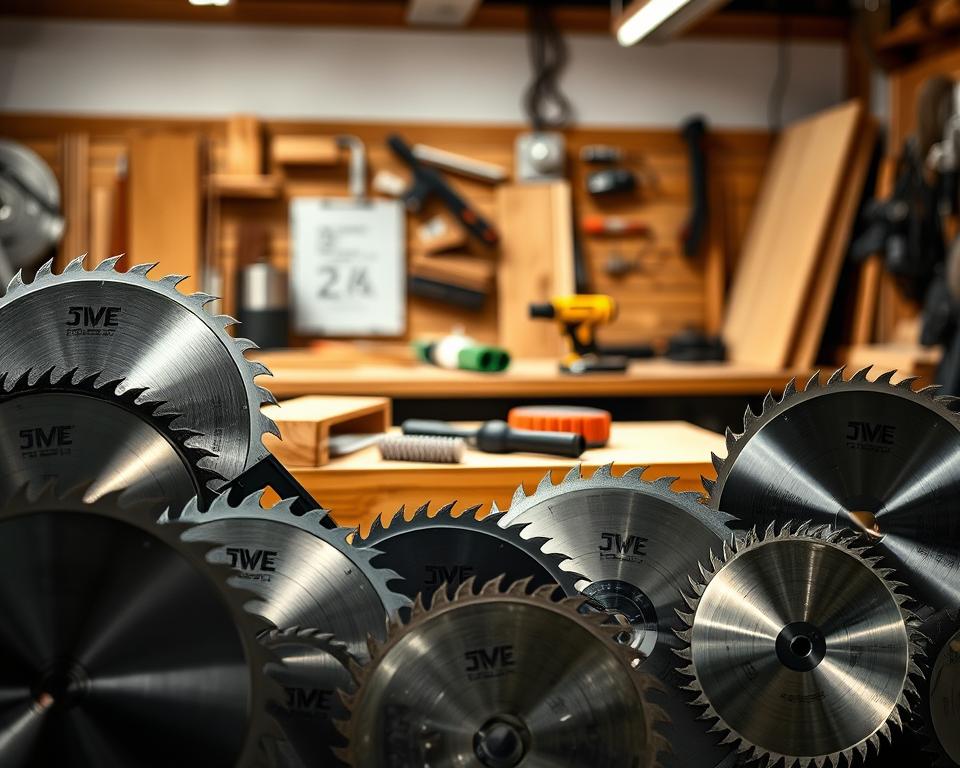
Circular saw blades vary for different materials and tasks. Knowing these types is vital for safe cutting.
- Carbide-Tipped Blades: Great for hardwoods and softwoods, these blades last long and resist wear.
- Diamond Blades: Perfect for hard materials like concrete, stone, and brick.
- Abrasive Blades: Best for cutting metal and dense materials.
- Specialty Blades: Made for tasks like fine cuts in plywood or cutting plastic.
Choosing the right blade for your material means cleaner cuts and less risk of damage or kickback.
How to Change Blades Safely
Changing a circular saw blade needs care to avoid injuries. Follow these steps:
- Unplug the Saw: Always turn off the saw before changing the blade.
- Use Protective Gear: Wear gloves to protect your hands from cuts.
- Follow Manufacturer Instructions: Check your saw’s manual for blade change steps.
- Secure the Blade: Make sure the new blade is properly seated and secured as the manual says.
Cleaning and Caring for Your Blades
Keeping your circular saw blades in good shape is important. Here’s how:
- Clean the Blades: Use a cleaning solution to remove resin and debris.
- Inspect for Damage: Check blades regularly for wear or damage.
- Store Properly: Store blades in a dry place, away from sunlight.
Understanding blade selection and maintenance boosts your saw’s performance and safety. Always follow the manufacturer’s guidelines for blade use and care.
Recognizing the Different Types of Cuts
As you get better with your circular saw, learning about different cuts is key. Knowing the various cutting techniques can make your woodworking better. It also keeps you safe while following Circular Saw Safety Rules.
Straight Cuts vs. Bevel Cuts
Making straight cuts is a common use of a circular saw. It involves cutting in a straight line along the wood grain. Bevel cuts, on the other hand, tilt the saw blade for angled cuts. This is great for making joints or angled edges.
To do a bevel cut, adjust the bevel angle as the maker says. Keep your hand steady and the saw on track to avoid accidents. This follows circular saw safety tips.
Compound and Cross Cuts
Compound cuts mix bevel and miter cuts for complex angles. Cross cuts cut across the wood grain, usually at 90 degrees. Getting good at these takes practice and patience.
When doing compound or cross cuts, clamp your workpiece well. This makes your cuts more accurate and safer. It also lowers the chance of the saw binding or kicking back.
Techniques for Making Precision Cuts
To make precise cuts, use the right technique, sharp blades, and accurate measurements. Here are some tips:
- Use a sharp blade for the cut you’re making.
- Measure and mark your cut line carefully.
- Use a guide or fence to keep the saw straight.
- Feed the saw steadily and consistently.
By following these tips and knowing the different cuts, you’ll get better at cutting accurately and safely.
| Cut Type | Description | Safety Tip |
|---|---|---|
| Straight Cut | Cutting along the wood grain in a straight line. | Keep the saw on track using a guide. |
| Bevel Cut | Cutting at an angle by tilting the saw blade. | Adjust the bevel angle carefully and maintain a steady hand. |
| Compound Cut | A combination of a bevel and a miter cut. | Secure the workpiece firmly to prevent movement. |
| Cross Cut | Cutting across the wood grain, typically at 90 degrees. | Use a sharp blade and maintain control to avoid kickback. |
Techniques for Managing Material Securely
To cut safely, managing your material well is key. This means preparing it right, using the best techniques, and knowing your material.
Using Clamps or Vises Effectively
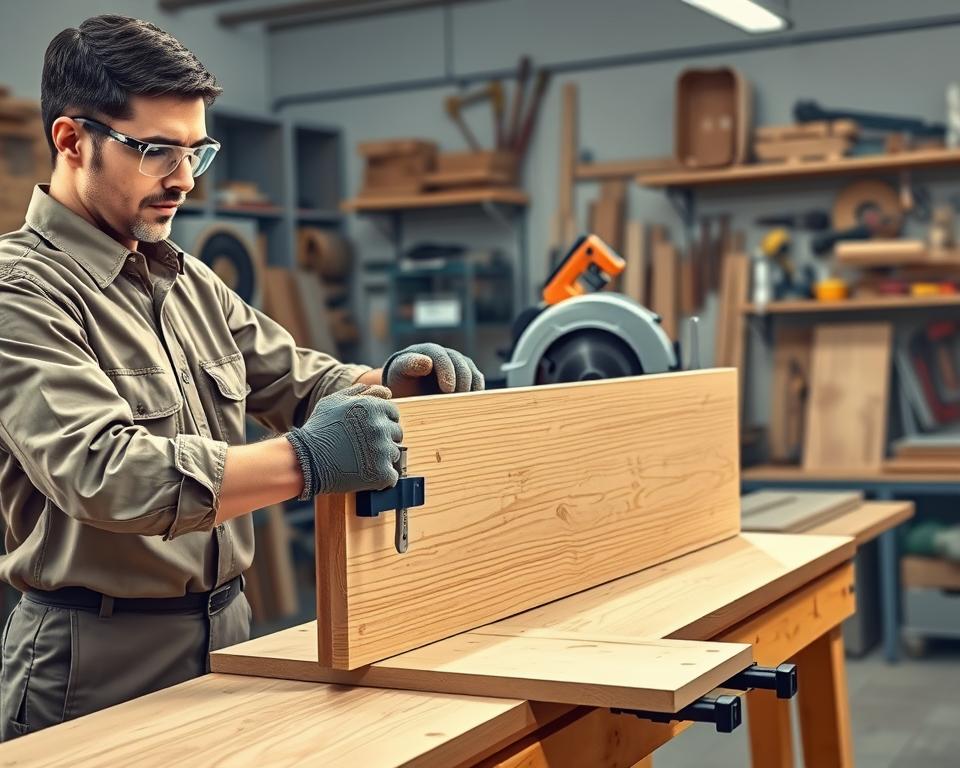
Clamps and vises are vital for keeping your workpiece steady. They stop the material from moving, which lowers accident risk. Make sure clamps are tight and vises hold the material right.
Tips for Effective Clamping:
- Choose clamps that fit your material’s size and type.
- Place clamps near the cut area but not in the way of the saw.
- Ensure clamps are tightened evenly to avoid uneven pressure.
Understanding Feed Rates for Different Materials
The speed at which you move the saw changes with the material. Hardwoods need a slower pace than softwoods. Knowing the right speed helps you control the saw and avoid kickback.
| Material Type | Recommended Feed Rate |
|---|---|
| Softwood | Moderate to Fast |
| Hardwood | Slow to Moderate |
| Plywood | Moderate |
Ensuring Stability During Cut
Keeping steady during a cut is vital for safety and precision. This means securing the material well and gripping the saw firmly. Stand balanced too.
Key Stability Factors:
- Make sure the workpiece is fully supported.
- Keep your body balanced.
- Use both hands to control the saw firmly.
Learning these material management techniques boosts your safety and efficiency with a circular saw. Safety is a continuous effort that requires learning and attention to detail.
Responding to Accidents and Injuries
It’s vital to handle accidents and injuries well to keep a safe work area with circular saws. Even with safety steps, accidents can happen. Being ready helps lessen their effects.
First Aid Steps for Cuts
Act fast and right when a cut happens. First, apply gentle pressure with a clean cloth or bandage to stop bleeding. If the cut is deep or bleeding doesn’t stop, get medical help right away.
Basic First Aid Kit Essentials:
| Item | Description |
|---|---|
| Bandages | For covering cuts and scrapes |
| Antiseptic Wipes | For cleaning wounds |
| Gloves | For protecting hands from infection |
Reporting Workplace Injuries
It’s key to report any injury, no matter how small. This helps in checking what caused it and stopping it from happening again.
It’s not just about following safety rules; it’s about making sure everyone is safe at the end of the day.
Reviewing and Learning from Incidents
After an incident, a detailed review can show what went wrong and how to avoid it next time. This is key to keeping safe and building a safety culture.
Understanding how to respond to accidents and taking steps ahead can make our workshop safer. It’s about making safety everyone’s job.
Staying Updated on Safety Guidelines
Keeping a safe work area is a constant task. It needs ongoing effort and keeping up with new safety rules. As I work with circular saws, I know it’s key to stay informed about the latest safety tips and laws.
Ongoing Education and Resources
Using resources like OSHA guidelines and circular saw safety info from makers helps me stay current. These tools give me important info on safe use and best practices.
Training for Safe Practices
Attending training on power tool safety, including circular saws, boosts my knowledge. It’s vital for learning how to handle and use tools safely in real life.
Industry Standards and Compliance
Following industry rules is key for safety and compliance. I regularly check for updates to safety standards. This way, I make sure to follow all Circular Saw Safety Rules and guidelines.