


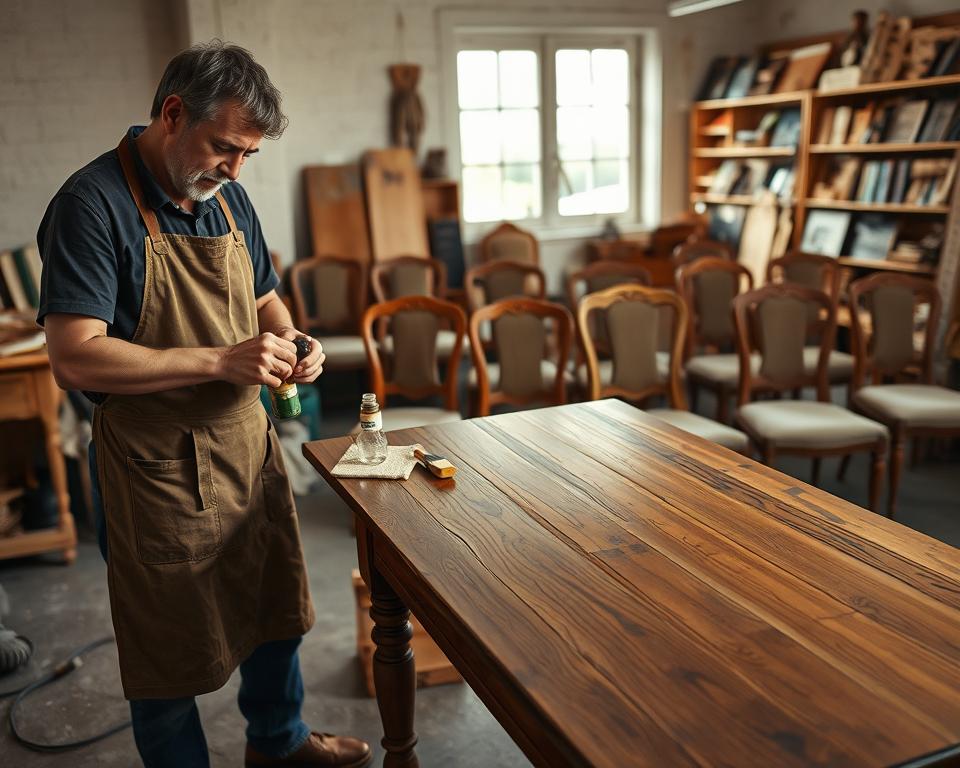
I’ve had my share of frustrating moments setting up my home. But nothing was as upsetting as finding unsightly water rings on my favorite furniture. These marks can really make a room look old and neglected. But, there are ways to make your furniture look new again.
It’s important to tackle water rings right away to avoid them sticking around. You can try using common items like iron, white vinegar, and olive oil. Or, you might need a more advanced method. For the best tips, check out expert advice on fixing water stains on wood.
Key Takeaways
- Act quickly to remove water rings to prevent permanent damage.
- Use household items like iron, vinegar, and olive oil to restore furniture.
- Test any removal method on an inconspicuous area first.
- Apply olive oil after treatment to restore shine.
- Regular polishing can help prevent water rings from forming.
Understanding Water Rings and Their Causes
Water rings on furniture are a common problem. They can be frustrating, ruining our favorite pieces. To fix them, we need to know what they are and how they form.
What Are Water Rings?
Water rings are circular marks on surfaces, often on furniture, caused by moisture. Their size and intensity depend on the water amount and exposure time. They usually form from spills or condensation not being cleaned or dried properly.
Common Sources of Water Rings
Several things can cause water rings. These include:
- Condensation from glasses or vases left on furniture without coasters or mats.
- Spills from drinks or other liquids that aren’t cleaned up right away.
- High humidity levels in the air, which can make moisture settle on surfaces.
Knowing these sources helps us prevent water rings.
How Different Surfaces React to Moisture
Different surfaces handle moisture differently, affecting water ring formation. For example:
- Wood surfaces can soak up moisture, causing discoloration or ring marks.
- Metal surfaces might not absorb moisture but can rust or corrode if not dried quickly.
- Glass surfaces usually resist moisture but can show water spots if not dried correctly.
Understanding how materials react to moisture is key to preventing and fixing water rings.
Immediate Actions to Take When You Notice a Water Ring
Seeing a water ring on your favorite furniture can be upsetting. But, acting fast can lessen the damage. First, stay calm and think about what to do next.
Assessing the Damage
Before you begin, check how bad the damage is. See if the water ring has gone through the finish or if it’s just on the surface. Knowing this helps you choose the right way to fix it. For example, dealing with a wooden surface is different from a varnished or painted one.
Avoiding Further Damage
To stop the water ring from getting worse, act fast. Use a soft, dry cloth to soak up as much water as you can. Don’t rub the ring, as this can hurt the finish or push the water deeper. For tips on removing water rings, check out The Spruce. They have good advice on using Vaseline.
Gathering Necessary Tools
To remove the water ring well, you’ll need some basic tools and stuff. Here’s a list of what you might need:
| Tool/Material | Purpose |
|---|---|
| Soft, dry cloth | Blotting excess moisture |
| Mayonnaise or petroleum jelly | Moisturizing the wood to remove the ring |
| Baking soda and water paste | Gentle abrasive cleaning |
| Hair dryer or iron | Applying heat to evaporate moisture |
| Furniture wax or polish | Restoring the finish after removal |
By checking the damage, avoiding more harm, and getting the right tools, you’re ready to fix the water ring. Next, we’ll look at home remedies for removing water rings.
Common Household Remedies for Removing Water Rings
Removing water rings can be a challenge, but there are several effective household remedies you can try.
Using Mayonnaise
One of the most popular DIY methods for removing water rings involves using mayonnaise. The oil in the mayonnaise helps to moisturize the wood, potentially lifting the water ring. To try this method, apply a generous amount of mayonnaise to the affected area and let it sit overnight. Then, wipe it off with a clean cloth and assess the result.
Baking Soda Paste Method
Another effective remedy is using a baking soda paste. Mix baking soda with water or olive oil to form a paste, and then gently rub it onto the water ring using a soft cloth. The abrasive nature of baking soda can help remove the ring without damaging the furniture.
Vinegar and Olive Oil Mixture
A mixture of vinegar and olive oil is also a viable solution. The acidity in the vinegar can help break down the water ring, while the olive oil moisturizes the wood. Mix equal parts of vinegar and olive oil, apply it to the affected area, and buff it out with a soft cloth.
Here’s a comparison of these methods in terms of ease of use, required ingredients, and effectiveness:
| Method | Ingredients | Ease of Use | Effectiveness |
|---|---|---|---|
| Mayonnaise | Mayonnaise | Easy | High |
| Baking Soda Paste | Baking Soda, Water/Olive Oil | Moderate | Medium |
| Vinegar & Olive Oil | Vinegar, Olive Oil | Easy | High |
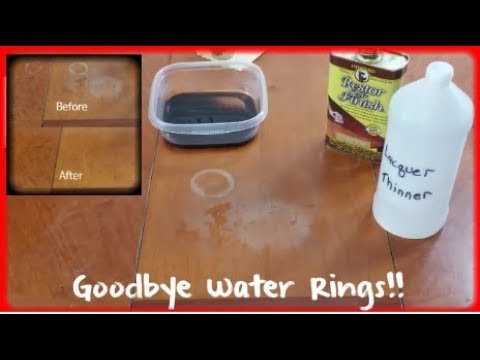
These household remedies offer a convenient and cost-effective way to remove water rings from your furniture. Always test a small area first to ensure the remedy doesn’t damage the finish.
Professional Products for Water Ring Removal
When home fixes don’t work, it’s time for professional help. For tough water rings, these products offer a strong solution. I’ll talk about the different professional products, like furniture repair kits and special cleaners. We’ll also look at some top brands.
Furniture Repair Kits
Furniture repair kits are made to fix damaged furniture, including water rings. They come with tools and products like wax fillers and polish. Minwax and Varathane are well-known for their kits.
Specialty Cleaners
Specialty cleaners are made for specific stains and damage, like water rings. Pledge and Howard’s Feed-N-Wax are favorites for their results. Always check the label to make sure it’s right for your furniture.
Comparison of Popular Brands
Here’s a look at some top brands to help you decide:
| Brand | Product Type | Surface Compatibility | Price Range |
|---|---|---|---|
| Minwax | Repair Kit | Wood | $20-$50 |
| Varathane | Repair Kit | Wood, Metal | $25-$60 |
| Pledge | Specialty Cleaner | Various | $5-$15 |
| Howard’s Feed-N-Wax | Specialty Cleaner | Wood | $10-$30 |
Looking at these options and their details will help you pick the right product for your furniture.
Effective Techniques for Removing Water Rings
Water rings on furniture can be unsightly, but there are ways to fix them. It’s important to pick the right method to avoid making things worse.
The Iron Method
Using an iron is a good way to remove water rings. Place a cloth over the ring and iron it gently on low heat. This method helps dry out the wood.
Tip: Always use a cloth between the iron and the furniture. This prevents damage or color change.
Hair Dryer Approach
Another method is using a hair dryer. Hold it a few inches away and move it slowly. This helps dry out the area without damaging finishes.
“Using a hair dryer is a simple and effective way to remove water rings, even on sensitive surfaces.”
Rubbing Alcohol Treatment
Rubbing alcohol works well on wooden surfaces. Dampen a cloth with it and rub the ring gently. Then, wipe off excess and buff to restore the finish.
- Apply rubbing alcohol to a soft cloth.
- Gently rub the cloth onto the water ring.
- Wipe away excess alcohol with a dry cloth.
- Buff the area to restore the finish.
Each method has its own benefits and risks. Always test a small area first to avoid damage.
How to Protect Your Furniture After Removing Water Rings
After removing water rings, it’s important to protect your furniture. This keeps it looking good and lasting longer. Taking steps to prevent future damage is key.
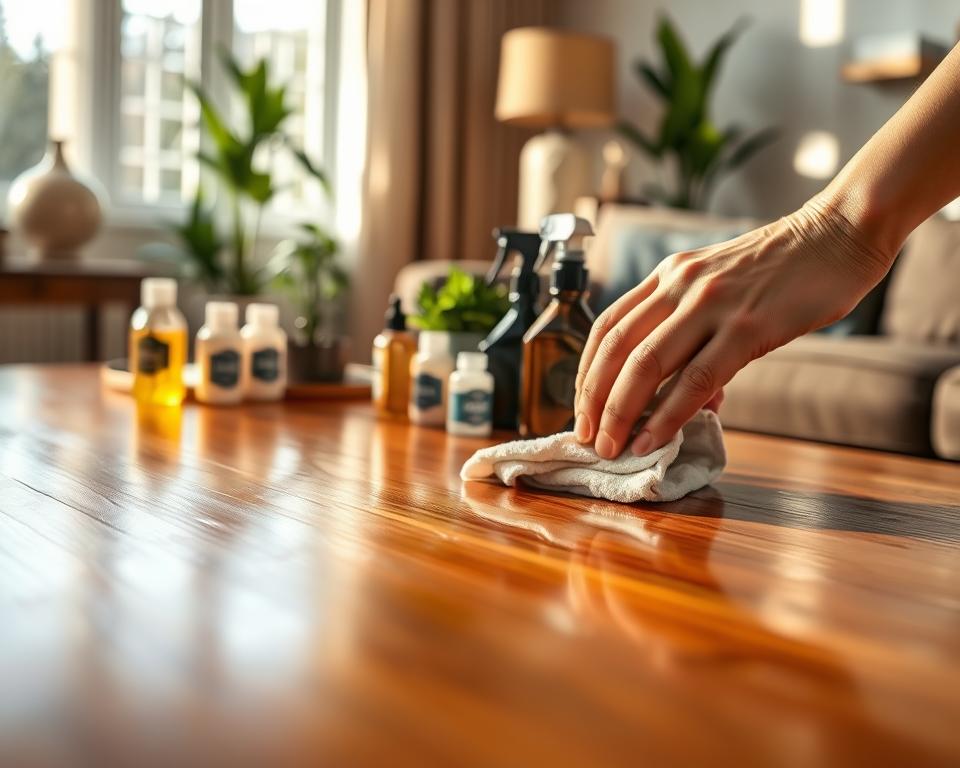
Applying a Furniture Polish
Using a furniture polish is a must. It makes your furniture look better and protects it from water rings. Choose a high-quality polish that fits your furniture’s material. Polishes with beeswax or silicone work well.
Benefits of Furniture Polish:
- Enhances the furniture’s appearance
- Provides a protective layer against water rings
- Can improve the durability of the furniture surface
Regular Maintenance Tips
Regular care is essential to avoid water rings. Dust your furniture often and watch for wear or damage. Also, rotate items to avoid uneven wear.
| Maintenance Task | Frequency | Benefits |
|---|---|---|
| Dusting | Weekly | Prevents dust buildup, reduces risk of scratches |
| Inspecting for damage | Monthly | Early detection of issues, allows for timely repair |
| Polishing | Quarterly | Maintains appearance, provides protective layer |
Using Coasters and Mats
Coasters and mats are great for preventing water rings. They soak up spills and protect your furniture. Use them under glasses and mats under vases or decorations.
Tips for Choosing Coasters and Mats:
- Choose materials that are absorbent and durable
- Select designs that complement your furniture’s style
- Consider using silicone or cork products for their protective qualities
By following these tips and keeping up with maintenance, you can prevent future water rings. This will help your furniture stay in great condition.
Preventive Measures to Avoid Future Water Rings
To keep your furniture looking great, take steps to stop water rings. Knowing why they happen and using simple ways to prevent them can help a lot. This way, you can keep your furniture safe from water rings.
Selecting the Right Finish
Choosing the right finish is key to avoiding water rings. A finish that fights moisture can really help. There are many finishes like wax, polyurethane, and varnish, each with its own level of protection.
- Wax Finish: Acts as a moisture barrier but needs to be reapplied often.
- Polyurethane Finish: Creates a strong, water-resistant layer perfect for busy spots.
- Varnish Finish: Has a hard, protective surface that fights water and spills well.
Choosing Quality Furniture Materials
The material of your furniture matters a lot for water ring prevention. Picking materials that naturally resist moisture is smart. For example, solid hardwoods or metals are more durable and less likely to get damaged by water than veneered or particleboard.
“The quality of the material is directly related to its durability and resistance to environmental factors.”
Educating Household Members
Teaching your family about furniture care is also important. Simple habits like using coasters and cleaning spills fast can really help. Making these habits part of your daily life can keep your furniture looking good for a long time.
- Use coasters and placemats to protect surfaces from water marks.
- Clean spills immediately to prevent moisture from seeping into the furniture.
- Regularly inspect your furniture for signs of wear and address any issues promptly.
By taking these steps, you can enjoy your furniture for many years without worrying about water rings.
Spot Testing Before Applying Remedies
Always do a spot test before using any method to remove water rings from your furniture. This step helps prevent damage to the finish or discoloration of the material.
Importance of Spot Testing
Spot testing is key because it shows how your furniture will react to a removal method. Different materials and finishes can react differently. A spot test helps avoid damage.
By testing a small, hidden area first, you can make sure the method is safe and works well.
Recommended Testing Areas
Choose a spot that’s not easy to see for the test. Look under furniture, the back of a chair, or a hidden part of a table. Make sure it matches the material and finish of the water ring you’re trying to remove.
What to Watch For
Watch the test area closely for any bad signs. Look for discoloration, texture changes, or damage. If you see any problems, try a different method.
| Removal Method | Potential Risk | Precaution |
|---|---|---|
| Using Mayonnaise | Discoloration | Test on a hidden area first |
| Baking Soda Paste | Abrasion | Apply gently, avoid rubbing |
| Vinegar and Olive Oil | Finish damage | Dilute vinegar with water, test first |
By following these steps and doing a thorough spot test, you can safely and effectively remove water rings. Remember, caution and patience are key to success.
When to Seek Professional Help
Many water rings can be fixed at home, but some need a pro. If DIY methods don’t work, it’s time to call in an expert. This ensures your furniture gets the care it needs.
Signs Your Furniture Needs Expert Care
Some signs show your furniture needs more than a simple fix. Look out for:
- Deep or stubborn water rings that have penetrated the finish.
- Damage to the wood or other materials, such as warping or discoloration.
- Furniture with delicate designs or antique pieces that require specialized care.
Finding a Reliable Restorer
Finding a good restorer can be tough, but there are ways to make sure you choose the right one:
- Check online reviews and ask for referrals from friends or family.
- Verify the restorer’s credentials and experience with similar furniture pieces.
- Request a consultation to discuss your furniture’s needs and the restoration process.
By following these steps, you can find a reliable expert to fix your furniture.
Cost Considerations for Restoration
The cost of professional restoration varies based on several factors:
- The type and extent of the damage.
- The materials and techniques required for restoration.
- The restorer’s level of expertise and reputation.
Getting a detailed estimate is key before starting the restoration. While it might seem expensive, professional restoration is worth it for valuable or sentimental items.
Long-Term Care for Your Furniture
Keeping your furniture in top shape requires regular care and the right methods. A long-term care plan helps avoid water rings and keeps your furniture looking great.
Best Cleaning Practices
It’s key to clean your furniture the right way to keep it looking good. Always dust your furniture regularly with a soft, dry cloth to stop dust from building up. For deeper cleaning, use a mild cleaner that matches your furniture’s material. For wood, a mix of vinegar and olive oil works well.
- Use a soft, dry cloth for dusting.
- Avoid harsh chemicals that can damage the finish.
- Test any cleaning solution on a small, inconspicuous area first.
Seasonal Maintenance Tips
Each season brings its own challenges for your furniture. During humid seasons, keep your furniture away from direct moisture, and think about using a dehumidifier to keep the air stable. In dry seasons, a humidifier can prevent wood from drying out and cracking.
- Adjust your maintenance routine according to the season.
- Use coasters and placemats to protect surfaces from spills and heat.
- Rotate cushions and pillows regularly to ensure even wear.
Protectants to Consider
Using protectants can greatly extend your furniture’s life. Think about using furniture wax or polish to protect the surface and make it look better. For fabric furniture, a fabric protector can help keep stains and spills away.
- Furniture wax or polish for wooden surfaces.
- Fabric protectors for upholstered furniture.
- Coasters and placemats for daily protection.
By sticking to these tips and making them part of your routine, your furniture will stay in great shape for many years.
Myths and Misconceptions About Water Rings
There’s a lot of wrong information about water rings. It’s hard to find good ways to remove them. I’ve dealt with these marks and know how important it is to know the truth.
Common Misunderstandings
Many think water rings mean the furniture is low quality. But, water rings can happen on any surface, no matter the furniture’s quality. Another wrong idea is that harsh chemicals are the best fix. But, they can actually harm more than help.
Some believe water rings are forever and can’t be removed. While some can be tough, most can be fixed with the right methods and materials. But, using a hair dryer or iron directly on the ring can damage the finish or harm the material.
The Truth Behind Myths
Water rings are usually from moisture getting into the finish and into the wood or other materials. To remove them, you need to deal with the moisture without harming the surface. DIY water ring removal methods can work well if done right.
Some methods, like using mayonnaise or a baking soda paste, are often suggested. But, how well they work depends on the finish and the furniture material. It’s key to know the cause and then pick the right removal method.
Clarifying Myths and Facts
Let’s clear up some myths and facts:
- Myth: Water rings always mean low-quality furniture. Fact: Water rings can happen to any furniture if it gets wet.
- Myth: Harsh chemicals are needed for removal. Fact: Gentle, right methods are often better and safer.
- Myth: Water rings are permanent. Fact: Most water rings can be removed with the right techniques.
Knowing the truth about these myths helps you deal with water rings on your furniture better. This way, you can keep it looking great.
Final Thoughts on Water Ring Removal
Removing water rings from furniture is easier with the right techniques and materials. We’ve learned how to tackle water rings from start to finish. Taking good care of your furniture is essential to keep it in top shape.
Key Takeaways
Remember, acting fast when you see a water ring is key. You need to assess the damage and pick the best removal method. Use household items or professional products, but always test them first to avoid more harm.
Regular care, like polishing and using coasters, helps prevent water rings. This simple step can make a big difference in keeping your furniture looking great.
Preventing Future Issues
Preventing water rings is just as vital as fixing them. Choose the right finish and quality materials for your furniture. Teach everyone in your home how to care for it properly. This way, you can reduce the chance of water rings and keep your furniture lasting longer.
Share Your Experiences
I encourage you to share your stories about removing or preventing water rings. Your experiences can help others in our community. Together, we can keep our furniture looking its best by sharing our knowledge and tips.