


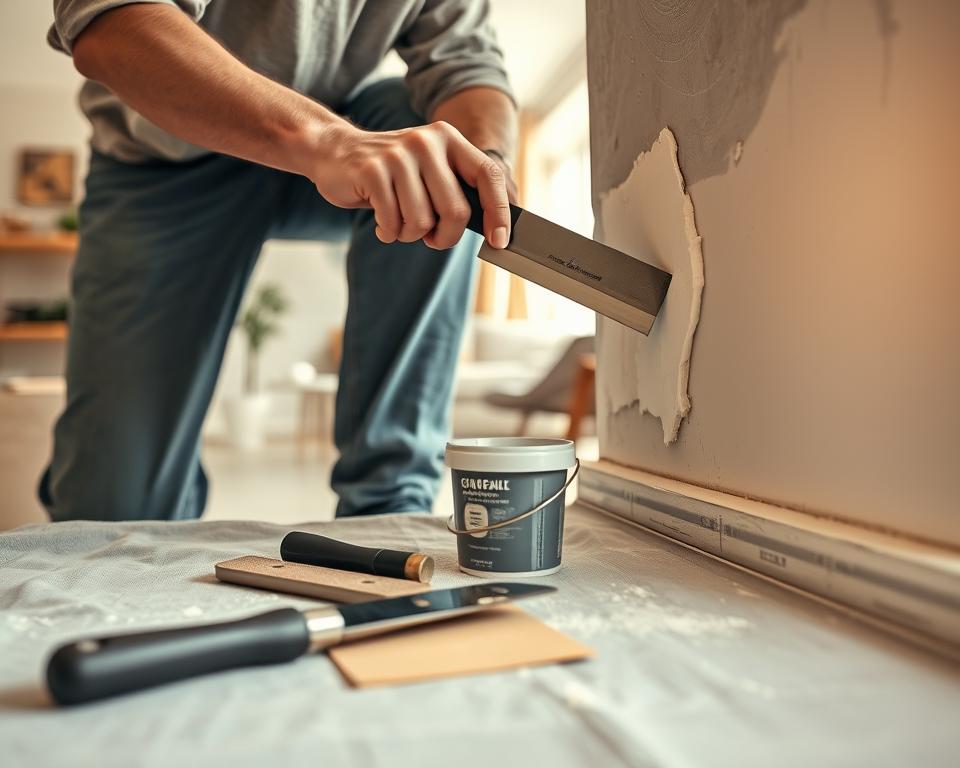
Did you know a small hole in the drywall can cause big problems if not fixed? DIY drywall repair is a simple and affordable way to avoid expensive professional costs.
As a homeowner, I’ve found that repairing drywall holes is a key skill. It can make your home look better. In this article, I’ll share easy DIY tips and techniques for patching drywall holes. You’ll learn how to get professional-looking results without spending a lot.
Key Takeaways
- Learn the importance of repairing drywall holes
- Discover easy DIY tips for drywall repair
- Understand the benefits of DIY drywall repair
- Find out how to achieve professional-looking results
- Get started with simple DIY drywall repair techniques
Understanding Drywall and Common Hole Types
First, let’s talk about drywall. It’s a panel made of gypsum plaster between two layers of paper. It’s easy to install and finish, making it popular for walls and ceilings.
Different Types of Drywall Holes
Drywall holes come in various sizes and shapes. Small holes are under 1 inch, often from nails or screws. Medium-sized holes are 1 to 4 inches, caused by furniture or other impacts. Large holes are over 4 inches and need more work to fix.
Causes of Drywall Damage
Knowing why drywall gets damaged helps prevent future holes. Damage can come from furniture impacts, water, or foundations settling. Sometimes, it’s from bad installation or low-quality materials.
Identifying the Right Repair Method
After figuring out the hole’s type and cause, pick the right fix. Small holes might just need spackling. But bigger holes might need a patch or mesh. The goal is to match the repair to the damage.
Knowing about drywall holes and their causes helps you pick the right materials and methods. This way, you can get a smooth finish and avoid more damage.
Tools and Materials Needed for Repairs
Having the right tools and materials is key for fixing drywall damage. Whether it’s small holes or big cracks, being ready makes a big difference. It helps you get a professional finish.
Essential Tools for Patching
To begin your drywall repair, you’ll need some basic tools. You’ll need a drywall knife or utility knife for cutting and smoothing. A putty knife is for applying joint compound, and a sandpaper or sanding block for making the surface smooth.
For bigger repairs, you might need more tools. This includes a drywall saw for cutting out damaged areas, a drill for screw holes, and a mud pan for mixing compound.
https://www.youtube.com/watch?v=8blwwA6pH1E
Recommended Patching Materials
The right materials are important for a good drywall repair. For small holes, spackling compound or joint compound works well. But for bigger holes, you might need a drywall patch or drywall mesh to strengthen the area before applying compound.
- Drywall tape for seams
- Joint compound for filling holes and cracks
- Spackling compound for small repairs
- Drywall patches or mesh for larger repairs
Safety Gear for Drywall Work
When working with drywall, safety is a must. You’ll need dust masks or respirators to avoid inhaling dust. Safety goggles protect your eyes from debris, and gloves keep your hands safe from sharp edges and compound.
With the right tools, materials, and safety gear, you’re ready to tackle your drywall repair project confidently.
Preparation: Getting Ready to Patch
Getting ready to patch drywall is all about preparation. The right steps before applying any patching material make the repair last and look good.
Assessing the Damage
First, you need to check the damage. Look at the hole’s size and depth. Also, see if there’s damage around it. Knowing the type of drywall is important too, as it affects how you fix it.
- Check if the hole is deep or shallow.
- Determine if there are any jagged edges or loose drywall around the hole.
- Inspect for any signs of water damage or mold.
Cleaning the Area
Cleaning the area is a must. Use a vacuum or a damp cloth to get rid of dirt and dust. For tough dirt, a mild detergent works well. A clean area helps the patch stick better.
Gathering Your Materials
Having everything you need before starting is a big time-saver. You’ll need spackle, joint compound, sandpaper, a putty knife, and paint. Don’t forget a dust mask and safety goggles to protect yourself.
- Gather all the necessary patching materials.
- Ensure you have the right tools for the job.
- Prepare your workspace to minimize mess and maximize efficiency.
By following these steps, you’re ready to fix your drywall. Proper preparation is the secret to a successful DIY patching drywall project.
Step-by-Step Guide to Patching Small Holes
Dealing with small drywall holes? No worries, I’ve got a simple guide for you. Fixing small holes can greatly improve your wall’s look.
Using Spackle for Small Holes
Spackle is great for small holes because it’s easy to use and dries fast. First, clean the area around the hole well. This ensures the spackle sticks right.
Then, put a small amount of spackle in the hole with a putty knife. Fill it up but don’t overdo it. Too much spackle means more sanding later.
Application Techniques for a Smooth Finish
Getting a smooth finish is key for a pro look. After spackling, let it dry fully as the maker says. Once dry, use a sanding block or sandpaper to even out the area. Make sure the edges blend with the rest of the wall.
| Step | Description | Tips |
|---|---|---|
| 1 | Clean the area around the hole | Use a damp cloth to remove dirt and debris |
| 2 | Apply spackle to the hole | Use a putty knife and fill the hole completely |
| 3 | Allow spackle to dry | Follow the manufacturer’s drying time instructions |
| 4 | Sand the area smooth | Use a sanding block or sandpaper to feather the edges |
By following these steps and using the right techniques, you can effectively repair small drywall holes and maintain the integrity and appearance of your walls.
Tackling Medium-Sized Holes
Fixing medium-sized holes in drywall is doable with the right tools and tips. These holes are bigger than a nail hole but not so big that you need to replace a whole section of drywall.
Utilizing a Patch or Mesh
For holes of this size, using a patch or mesh is key. A drywall patch or mesh helps the joint compound stick well, making the repair strong and lasting.
- Cut a drywall patch slightly larger than the hole.
- Apply joint compound around the edges of the patch.
- Press the patch over the hole, ensuring it adheres well to the surrounding drywall.
Repairing with Joint Compound
After placing the patch, it’s time to use joint compound for a smooth finish. You’ll need to apply thin layers, letting each dry before sanding.
Tips for a Smooth Finish:
- Apply the first layer of joint compound, spreading it smoothly over the patch.
- Allow the compound to dry completely, then sand it down to a smooth finish.
- Apply subsequent layers as needed, feathering the edges to blend with the surrounding drywall.
| Layer | Application Tip | Drying Time |
|---|---|---|
| 1st Layer | Apply generously, spread smoothly | 30 minutes to 1 hour |
| 2nd Layer | Feather edges, apply thinly | 30 minutes to 1 hour |
| 3rd Layer | Final coat, smooth finish | 1-2 hours |
By following these steps and using the right materials, you can achieve a professional-looking repair that will last.
Fixing Large Holes: When to Call a Pro
When you see big drywall damage, it’s time to think about getting help. “A stitch in time saves nine” is true for fixing drywall. Calling a pro can save you time, money, and the hassle of a bad repair.
Determining When DIY is Not Enough
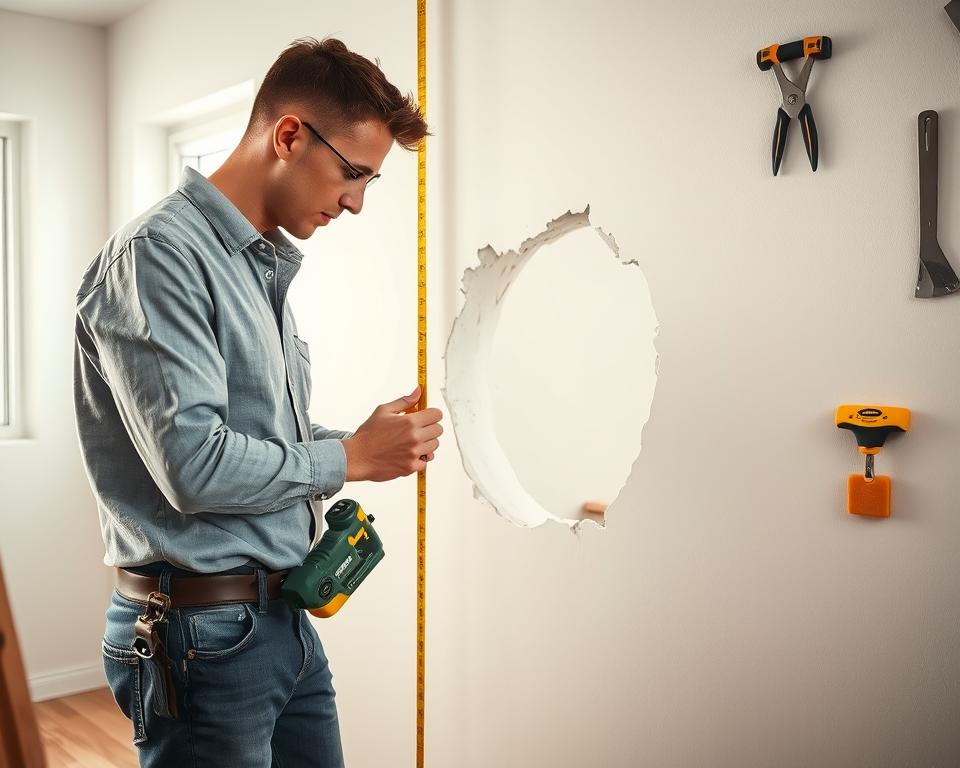
Big holes in drywall come from big impacts, like moving heavy furniture. If the hole is over a few inches or the drywall is damaged around it, you might need a pro.
Check these things to see if you need a pro:
- The size of the hole: If it’s bigger than a few inches, you might need a pro.
- The location of the damage: Holes near edges or corners are harder to fix.
- The extent of the surrounding damage: If the drywall is cracked or weak, you need a bigger repair.
If you’re not sure about the damage or how to fix it, get a pro. “Better safe than sorry” is a good rule to follow.
How to Prepare for a Professional Repair
If you think you need a pro for your drywall, here’s how to get ready:
- Clear the area around the damaged drywall for easy access.
- Move any furniture or fixtures that could get in the way or get damaged.
- Have any info about the damage ready, like when it happened and any past repairs.
Being ready can make the repair go smoothly and fast. A pro will know how to fix it right, making it look like new.
Fixing big holes in drywall is not just about looks. It’s also about keeping your walls strong. If you’re unsure, getting a pro is the best choice for a good job.
Finishing Touches After Patching
The last steps in fixing drywall include sanding the patch smooth and then priming and painting. This makes the wall look new again. It’s all about paying close attention and using the right methods.
Sanding the Patch Smooth
Sanding is key in fixing drywall. It makes the patch blend in with the rest of the wall. Start with a medium-grit sandpaper (120-150 grit) and move to a fine-grit (220-240 grit) for a smooth finish.
When sanding, move in circles and feather the edges. This helps the patch blend with the wall without any lines.
Priming and Painting the Repaired Area
After sanding, prime and paint the area. Priming creates a base for painting, making the repair look like the rest of the wall.
Use a roller or brush to apply primer, depending on the size of the repair. Wait for it to dry before painting.
Tips for a Seamless Finish:
- Choose paint that matches the wall color as closely as possible.
- Paint in thin layers, letting each dry before adding more.
- Use a roller for big areas and a brush for edges and corners.
| Task | Materials Needed | Tips |
|---|---|---|
| Sanding | Medium-grit sandpaper, fine-grit sandpaper | Sand in a circular motion, feathering the edges. |
| Priming | Primer, roller or brush | Apply a single coat, allow to dry according to manufacturer’s instructions. |
| Painting | Paint, roller, brush | Apply thin coats, allowing each coat to dry before applying the next. |
By following these steps and tips, you can get a professional finish on drywall repairs. Remember, the secret is patience and detail.
Common Mistakes to Avoid
To get a smooth drywall repair, it’s key to avoid common errors. When I do a DIY drywall patch, I watch out for mistakes that can ruin the fix.
Misjudging the Size of the Repair
One big mistake is thinking the damage is smaller than it is. Getting the size of the hole or crack right is vital for picking the right materials and methods.
- Measure the hole’s diameter to pick the right patch size.
- Think about how deep the damage is to figure out how many coats you’ll need.
- Look for any other damage around it that might need fixing too.
Skipping the Preparation Steps
Preparation is essential for a good drywall repair. Not cleaning and preparing properly can make the repair look bad and might not last.
- Clean the area well to help the new drywall stick to the old.
- Use a primer if needed to make painting easier.
- Let any compounds or adhesives dry fully before sanding or painting.
By avoiding these mistakes, you can get a drywall repair that looks professional and lasts. 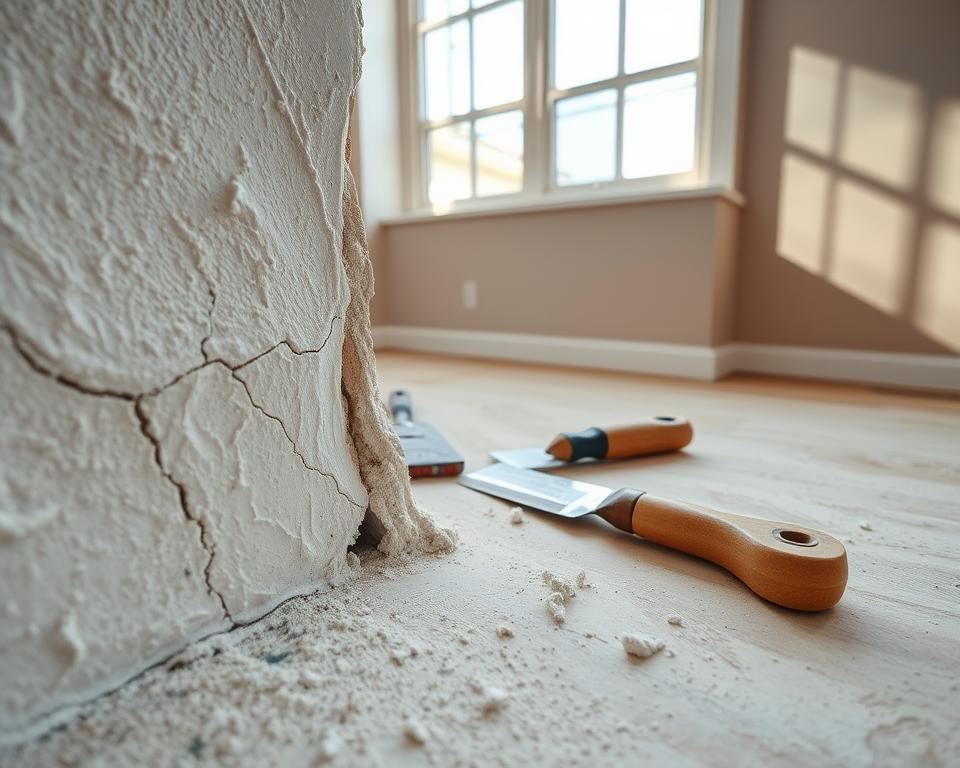
For more tips on drywall repair, check out home improvement guides. A good drywall repair makes your walls look better and keeps your home strong.
Maintenance Tips for Preventing Future Damage
To keep your drywall in top shape, it’s key to be proactive. Know the risks and take steps to avoid them.
Regular Inspections of Walls
Regular checks are vital to spot damage early. I suggest looking at your walls often for cracks, dents, or holes. This simple step can prevent big problems.
- Look for cracks around windows and doors.
- Check for dents or holes caused by furniture or other impacts.
- Inspect areas around electrical outlets and switches.
Using Protective Measures in High-Traffic Areas
High-traffic spots are more likely to get damaged. So, using protective measures is a must. I recommend putting corner protectors or wall guards to protect your drywall from impacts.
Some effective protective measures include:
- Corner protectors to prevent damage from furniture or carts.
- Wall guards to shield against impacts in hallways or busy areas.
- Door stops to prevent doors from hitting walls.
By following these tips, you can greatly lower the chance of future drywall damage. And your walls will stay looking great.
Eco-Friendly Options for Patching Drywall
I’ve been working on making my home greener. I’ve looked into eco-friendly drywall patching options. These choices are good for the planet and work well.
Sustainable Materials for Repair
Choosing the right materials for drywall patching is key. I’ve found that using sustainable materials is better for the environment. It also makes my home healthier. Here are some eco-friendly options I’ve tried:
- Recycled drywall: It’s made from waste and cuts down on landfill use.
- Low-VOC spackling compounds: These compounds are safer for indoor air. I found a great one at Green Building Supply.
- Eco-friendly joint compounds: These products have lower environmental impacts.
Environmentally Friendly Practices
Using eco-friendly practices is just as important as the materials. Here are some tips I follow:
- Measure and cut drywall patches carefully to avoid waste.
- Reuse materials like leftover drywall for small repairs.
- Recycle or donate drywall waste and unused materials.
Here’s a comparison of eco-friendly drywall repair options:
| Material/Practice | Environmental Benefit | Cost Comparison |
|---|---|---|
| Recycled Drywall | Reduces landfill waste | Slightly higher than traditional drywall |
| Low-VOC Spackling | Improves indoor air quality | Comparable to regular spackling compounds |
| Eco-friendly Joint Compounds | Lower environmental impact | May be slightly more expensive |
By choosing eco-friendly options, my drywall repairs are better for the planet. Whether you’re new to DIY or experienced, making green choices helps both your projects and the environment.
Resources for Further Learning
Exploring drywall repair and patching holes shows the importance of good resources. Whether you’re experienced or new, learning more can boost your confidence in DIY projects.
Recommended Reading Materials
For deeper learning, check out “The Complete Guide to Home Repair” and “Drywall: Professional Techniques for Walls and Ceilings.” These guides offer detailed information on drywall repair and home improvement.
Online Resources and Tutorials
Online tutorials and videos are great for learning new drywall repair techniques. The Family Handyman and YouTube channels like Home Repair Tutor have lots of helpful information and step-by-step guides.
Using these resources and practicing will prepare you for any drywall repair task. You’ll apply valuable tips to ensure your work is done right.