


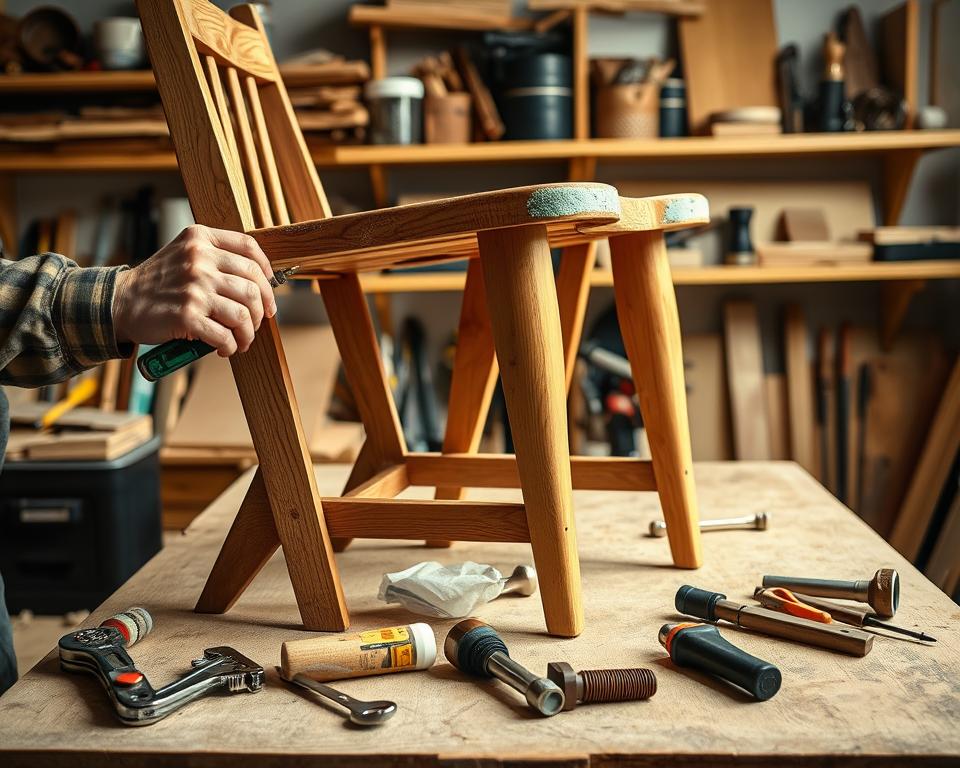
A wobbly chair can be frustrating and even hazardous. Did you know that replacing a wobbly chair can cost hundreds of dollars? Simple DIY fixes can save you money and extend the life of your furniture.
I’ve dealt with my fair share of wobbly chairs, and I’m here to guide you through the process of identifying and fixing the issue. Whether it’s a loose screw or an uneven leg, DIY Chair Repair is often easier than you think.
In this article, we’ll explore the common causes of wobbly chairs and provide step-by-step solutions to get your furniture sturdy again.
Key Takeaways
- Identify the cause of your wobbly chair
- Learn how to tighten loose fasteners
- Discover how to adjust or replace uneven legs
- Understand the importance of proper wheel maintenance for rolling chairs
- Find out when to use wood glue or shims for a sturdier fix
Understanding the Problem: Why Chairs Wobble
Before you can fix a wobbly chair, you need to know why it’s unstable. A wobbly chair is not just annoying. It can also show a bigger problem that needs fixing.
Common Causes of Wobbly Chairs
Wobbly chairs often have a few common problems. Loose joints and uneven legs are the main reasons. Over time, chair joints can loosen, making the chair wobble. If the chair’s legs are not even, it won’t sit flat, causing instability.
Identifying Loose Legs
To see if loose legs are the problem, check the chair’s legs and joints. If a leg is loose, tightening it might solve the issue. Sometimes, the problem is not the leg but the floor it’s on.
Uneven Floors and Their Impact
Uneven floors can make a chair unstable. If the floor is not level, the chair will wobble, even with even legs. In such cases, finding a fix that doesn’t change the floor is key. Using furniture pads or shims under the shorter leg can help stabilize the chair.
Understanding these causes is the first step to fixing unstable seating. By figuring out if the problem is with the chair or the floor, you can find the right Wobble Chair Fix. This ensures your chair is stable and safe to use.
Tools You’ll Need for the Repair
The first step in DIY Chair Repair is to gather the right tools and adhesives. Having the correct tools makes the repair smoother and more durable.
Basic Hand Tools
For most chair repairs, you’ll need basic hand tools. These include:
- A screwdriver set (both flathead and Phillips)
- An Allen wrench set
- Pliers (needle-nose and slip-joint)
- A hammer
- A tape measure
These tools help you tighten screws, adjust chair legs, and make other adjustments.
Recommended Adhesives
For a strong repair, the right adhesive is key. For Chair Leg Repair, consider these adhesives:
- Wood glue for wooden chairs
- Epoxy for a stronger bond on various materials
- Super Glue (cyanoacrylate) for quick fixes
Choose the right adhesive based on the chair material and repair type.
Optional Accessories for Stability
To improve chair stability, consider these optional accessories:
- Furniture pads or felt pads to prevent scratching floors and improve stability
- Anti-slip mats or stickers for under the chair legs
- Chair leg levelers for uneven floors

Step-by-Step Guide to Fixing Wobbly Chairs
Fixing a wobbly chair starts with finding out why it’s wobbly. It could be a loose screw, uneven leg, or a worn-out joint. Knowing the cause is key to fixing it right.
Tightening Loose Screws and Bolts
First, check if screws and bolts are loose. They can loosen over time, making the chair wobble. Look at all joints and tighten any loose parts with a screwdriver or wrench. But be careful not to tighten too much, as it can harm the chair.
Using Wood Glue for Sturdy Repairs
If a joint is loose, wood glue can help. Apply a bit of glue to the area, clamp it, and let it dry for a few hours. This makes the joint stronger and stops the wobble.
Regluing Chair Legs
For loose or detached legs, regluing is the fix. Clean the area, apply glue, and press the leg back into place. Clamping it and letting it dry overnight will make it strong again.
By following these steps, you can fix a wobbly chair and enjoy stable, comfy seating. Regular checks and tightening can also prevent wobbles from happening again.
Making Use of Furniture Pads
Furniture pads are a simple yet effective way to stabilize unsteady chairs. They work by providing a cushion between the chair leg and the floor. This reduces wobbling caused by uneven surfaces.
Choosing the Right Furniture Pads
When picking furniture pads, think about your floor and chair leg material. For example, felt pads are great for hardwood floors. On the other hand, rubber pads work well on many floors, including tile and carpet.
- Felt pads for hardwood and smooth surfaces
- Rubber pads for versatility and grip
- Plastic pads for durability and ease of cleaning
How to Install Furniture Pads
Installing furniture pads is easy. Start by cleaning the chair leg well. Then, remove the backing of the pad and press it firmly onto the leg. Make sure it’s centered and smooth out any air bubbles.
- Clean the chair leg
- Peel off the backing of the pad
- Press the pad onto the leg
Benefits of Using Furniture Pads
Furniture pads not only stabilize your chairs but also protect your floors from scratches. They are a budget-friendly option that can make your furniture last longer by reducing wear and tear.
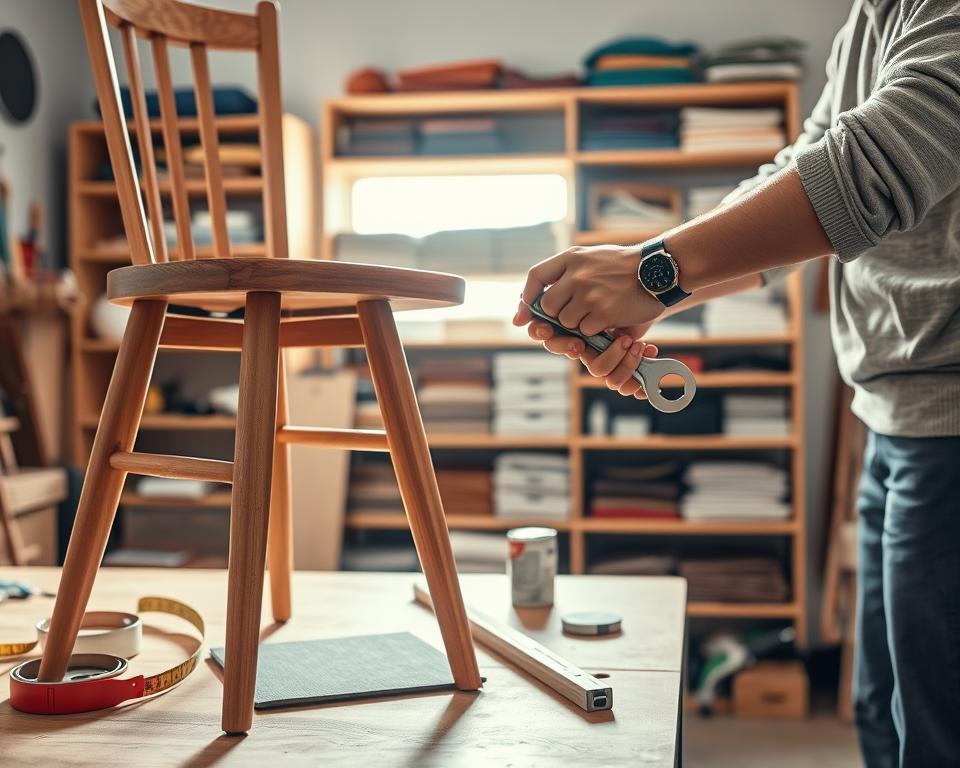
In conclusion, furniture pads are a simple and effective solution for wobbly chairs. By picking the right type and installing them correctly, you can enjoy sturdy chair solutions and stabilize unsteady chairs.
Assessing the Chair Type
Fixing wobbly chairs starts with knowing what kind of chair you have. Each material and build needs its own fix. So, let’s look at how to repair wooden, metal, and upholstered chairs.
Fixing Wobbly Wooden Chairs
Wooden chairs are popular in many homes. They often wobble because of loose joints or legs. First, check the joints for looseness. Use wood glue to fix them.
If the legs are uneven, try using furniture pads or shims. This will level the chair.
Addressing Issues with Metal Chairs
Metal chairs can wobble because of bent frames or loose screws. Look for any bends or damage in the frame. Tightening screws or replacing them can fix the problem.
For bent frames, try gently bending them back. Or, use metal repair methods.
“A sturdy chair is not just about aesthetics; it’s about safety and comfort.”
Steps for Repairing Upholstered Chairs
Upholstered chairs can wobble due to frame or upholstery issues. First, check the frame for damage or looseness. Tighten any loose parts and fix or replace the upholstery as needed.
Using furniture pads under the legs can also help. This prevents wobbling on uneven floors.
- Inspect the chair frame for damage.
- Tighten any loose screws or joints.
- Consider using furniture pads for added stability.
Knowing your chair’s type and using the right repair methods can fix unstable seating. This way, you’ll have a sturdy, wobble-free chair.
Preventive Measures for Chair Stability
To keep your chairs stable, take a few simple steps. These steps can help prevent your chairs from becoming unstable.
Regular Maintenance Checks
It’s important to regularly check your chairs. Look for loose screws, bolts, and joints. Tightening them can stop wobbliness.
- Inspect chair legs and joints for any damage or wear.
- Tighten any loose screws or bolts.
- Apply wood glue if you notice any loose joints.
Avoiding Overloading Your Chairs
Don’t overload your chairs to keep them stable. Know the weight limit of your chairs and avoid too much weight.
Tips to avoid overloading:
- Be cautious of the weight you put on the chair.
- Avoid standing on chairs or using them as ladders.
Tips for Keeping Floors Level
Uneven floors can make chairs wobbly. Keeping your floors level helps chairs stay stable.
Consider the following:
- Use floor leveling compounds if necessary.
- Check for any unevenness with a spirit level.
| Preventive Measure | Description | Benefit |
|---|---|---|
| Regular Maintenance | Inspect and tighten loose parts | Prevents wobbliness |
| Avoid Overloading | Be mindful of chair weight limits | Reduces risk of breakage |
| Level Floors | Ensure floors are even | Enhances chair stability |
By following these steps, your chairs will stay stable and sturdy longer. Regular checks and simple steps can make a big difference.
When to Seek Professional Help
Knowing when to call in the experts can save you time and frustration with a stubbornly wobbly chair. Many chair repairs can be done yourself, but some need a pro’s touch for sturdy chair solutions.
Signs That DIY Isn’t Enough
If you’ve tried to fix your wobbly chair but it’s not stable, it’s time to get help. Here are signs you need a pro:
- The chair’s structure is severely damaged, making it unsafe to use.
- You lack the necessary tools or expertise to complete the repair.
- The wobble is due to a complex issue, such as uneven flooring that requires specialized adjustment.
Finding a Qualified Furniture Repair Service
Looking for a pro to fix your chair? Here are tips to find a qualified furniture repair service:
- Ask for referrals from friends, family, or online reviews.
- Check if the repair service has experience with chairs similar to yours.
- Ensure they offer a warranty or guarantee on their work.
By recognizing when DIY isn’t enough and finding a qualified pro, you can get your chair fixed right. This ensures your chair is sturdy and lasts long, giving you sturdy chair solutions that last.
Creative Solutions for Wobbly Chairs
Fixing wobbly chairs is easier than you think. There are many creative ways to make them stable. It’s key to think outside the box and explore different repair options.
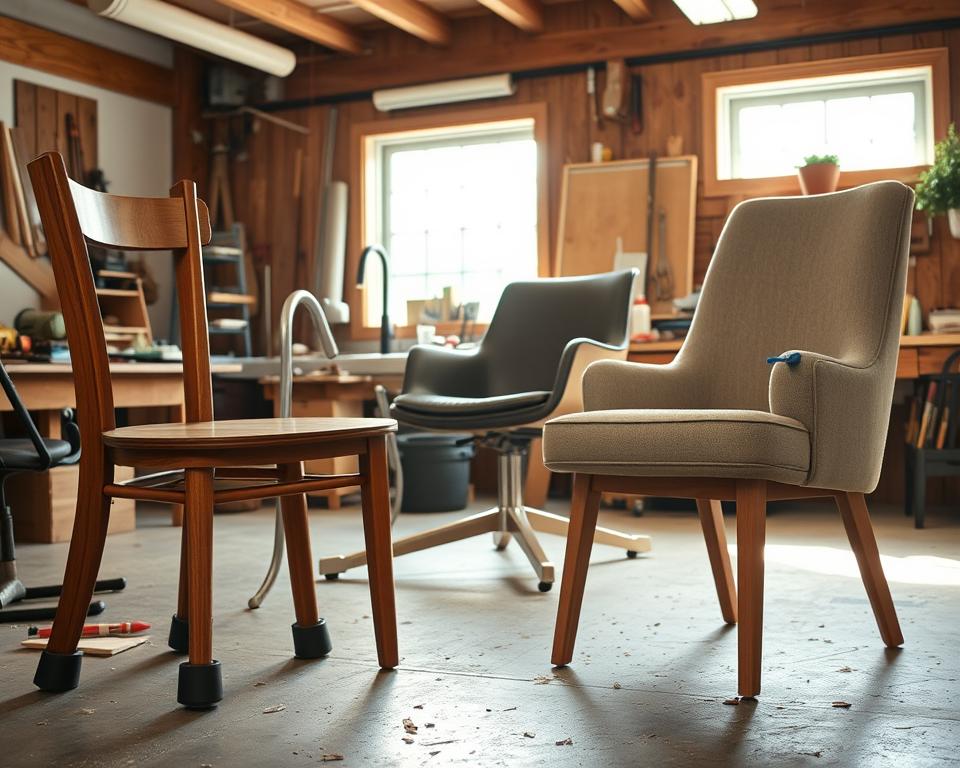
Adding Extra Support with Brackets
Adding brackets is a great way to make a chair stable. Brackets can add extra support by strengthening the chair’s joints and legs. First, find the chair’s weak spots and attach the brackets there.
For example, L-brackets can hold the legs to the floor or strengthen the chair’s joints. This trick works well for chairs with loose or broken parts.
Creative DIY Hacks for Stabilizing
There are many creative DIY hacks to stabilize a wobbly chair. One idea is to use adjustable feet or glides on the legs. These can adjust to uneven floors, making the chair stable.
Another trick is to place non-slip mats or pads under the chair’s legs. These mats can grip the floor, preventing the chair from slipping. Rubber or silicone products also work well for this.
To make the chair even more stable, tighten loose screws or bolts and reglue any loose joints. Regular checks can catch problems early, preventing big issues later.
Understanding Chair Joinery
Knowing about chair joinery is key for fixing or keeping chairs in good shape. Joinery is how the chair’s parts, like legs and seat, are connected. The joinery method affects the chair’s stability and how long it lasts.
Types of Joinery Used in Chairs
Chairs use different joinery methods, like mortise and tenon, dovetail, and dowel joints. Each has its own benefits and drawbacks. For example, mortise and tenon joints are strong and common in traditional furniture.
Dovetail joints are also strong, great for drawers and sometimes chairs. Dowel joints are simpler and faster to make, used in modern or mass-produced chairs.
Repairing Different Joinery Styles
Fixing chair joinery needs knowing the joint type and the right repair methods. For loose joints, wood glue and clamping can help. If a joint is damaged, you might need to replace the tenon or add dowels.
- For mortise and tenon joints, check if the tenon is loose or broken. Regluing or replacing the tenon can fix the issue.
- Dovetail joints are less likely to come loose, but if they do, regluing is usually the solution.
- Dowel joints can be reglued or reinforced with additional dowels if necessary.
When to Replace Joint Connections
It’s important to know when to replace joint connections to keep the chair stable. If a joint is badly damaged or has been fixed many times, it’s better to replace it. Also, if the chair is old or the wood is rotten, replacing the joint is safer and more durable.
For a Wobble Chair Fix, understanding the joinery is essential. When doing a Chair Leg Repair, checking the joinery helps find the best fix.
Conclusion: Enjoying Your Fixed Chairs
By following the steps in this guide, you’ve fixed your wobbly chairs. You’ve not only made them stable but also made your furniture last longer. Check out this guide for more tips on fixing wobbly chairs.
Key Takeaways
Regular checks, tightening screws, and using furniture pads are key. These steps help prevent wobbling and keep your chairs stable. Follow these tips to keep your chairs sturdy.
A Wobble-Free Future
Enjoying a wobble-free future means a more comfortable and safe space. DIY repairs are rewarding, and these simple techniques help you maintain your chairs. With a little effort, your chairs will stay stable and sturdy for years.