



Are squeaky floorboards driving you crazy? You’re not alone. Millions of homeowners in the United States face this issue every day. Squeaky floorboards can be more than just a nuisance; they can also be a sign of underlying problems that need to be addressed.
I know how frustrating creaky floorboards can be. The good news is that fixing them is often simpler than you think. In this article, I’ll guide you through a straightforward, step-by-step process to eliminate those annoying squeaks. By the end of this tutorial, you’ll have the knowledge and confidence to tackle the problem yourself.
Key Takeaways
- Identify the causes of squeaky floorboards
- Learn a simple, step-by-step process to fix squeaky floorboards
- Discover how to prevent future squeaks from occurring
- Understand when to seek professional help
- Gain confidence in maintaining your home’s flooring
Understanding Why Floorboards Squeak
Squeaky floorboards are a common problem for many homeowners. But first, you need to know why they squeak. The annoying sound usually comes from friction between different parts of the floor.
The Science Behind Squeaky Sounds
When floorboards squeak, it’s because two or more surfaces rub against each other. This friction can happen for many reasons. Changes in humidity can make the wood expand and contract, causing noise. Understanding this process is key to addressing the issue effectively.
Common Causes of Squeaky Floorboards
Several factors can make floorboards squeak. One reason is a house settling over time, causing the wooden floorboards to shift. This can make them rub against each other or the subfloor. Another reason is the wood drying out, creating gaps between the floorboards and the subfloor, leading to squeaks. Identifying the specific cause is key to applying the right fix.
Other causes include improper installation of the floorboards, inadequate support from the joists, and wear and tear over time. Knowing these causes helps homeowners fix squeaks and prevent them from happening again.
Tools You’ll Need for the Fix
Before you start fixing squeaky floorboards, make sure you have the right tools. The right equipment makes the job easier and faster.
Essential Tools for Squeaky Floorboard Repair
To fix squeaky floorboards, you’ll need some basic tools. Here are the must-haves:
- Clamps: These are key for keeping the floorboards steady while you work.
- Screws or Nails: You’ll need screws or nails, depending on your floorboards.
- Drill or Hammer: A drill is for screwing, and a hammer is for nailing.
- Talcum Powder or Baby Powder: These help reduce friction between the floorboards.
Optional Tools That Can Help
While the basic tools are essential, some extra tools can make things easier:
- Wood Glue: This strengthens the joints between the floorboards.
- Wood Filler: It fills gaps or cracks.
- Floorboard Clamps: These are special clamps for floorboards.
Having these tools ready will help you fix squeaky floorboards in your home. Remember, the secret to a successful DIY fix is being prepared and patient.
Quick Fixes for Minor Squeaks
Squeaky floorboards got you down? There are easy ways to silence them without a major renovation. Minor squeaks can often be fixed with simple, non-invasive methods.
Using Baby Powder to Reduce Friction
One of the simplest ways to silence squeaky floors is by using baby powder. Sprinkle it generously between the squeaky floorboards to reduce friction. The powder acts as a lubricant, minimizing the noise caused by the boards rubbing against each other.
To apply, simply sprinkle a small amount of baby powder into the crack between the floorboards. Then, sweep it into the gap with a small brush or your finger. This method is effective for squeaks that occur due to dryness or age.
Applying Talcum Powder in Cracks
Talcum powder is another effective solution for squeaky floorboards. Similar to baby powder, talcum powder reduces friction between the floorboards, eliminating the squeak. It’s essential to apply it directly into the cracks for maximum effectiveness.
For best results, use a small brush or a powder applicator to sprinkle the talcum powder into the gaps. Gently sweep or blow off any excess powder from the surface to avoid a messy residue.

Both baby powder and talcum powder are readily available and inexpensive, making them ideal quick fixes for minor squeaks. Yet, it’s important to note that these solutions are temporary and might need to be reapplied over time.
| Method | Effectiveness | Duration |
|---|---|---|
| Baby Powder | High | Temporary |
| Talcum Powder | High | Temporary |
By using either baby powder or talcum powder, you can effectively silence squeaky floors without resorting to more invasive repairs. These methods are great for providing a quick solution to the annoyance of squeaky floorboards.
How to Locate the Source of the Squeak
The journey to silence creaky floors starts with finding where the squeak comes from. Squeaky floorboards can be really annoying. Knowing where the noise is coming from is key to fixing it.
Techniques to Identify Squeaky Spots
To find squeaky spots, start by walking around your house and listening for squeaks. It helps to have someone else walk on the floorboards while you listen from below. This way, you can pinpoint the exact spot.
You can also press down on different parts of the floor to see where it squeaks. This simple technique can help you find the squeaky areas.
Another good method is to divide the floor into sections and check each one carefully. This way, you make sure you don’t miss any squeaky spots.
Checking Underneath the Floorboards
For a deeper look, check underneath the floorboards. If you can get to the crawl space or basement, look for any signs of movement or gaps. Shining a flashlight into the crawl space can reveal any issues.
When you’re checking underneath, also look for wiring or plumbing that might be causing the squeak. These can rub against the floor or joists. Finding these causes can help you fix the problem more effectively.
By using these squeaky floorboards tips, you can find the source of the squeak. Then, you can start working on making your floor quieter and more stable.
Repairing Loose Floorboards
Fixing squeaky floorboards is easy and can be done by yourself. These squeaks often happen because a house settles over time. This causes the wood to shrink and the floorboards to become loose.
Securing Loose Boards with Screws
One good way to fix loose floorboards is by using screws. You drill screws into the floorboards to attach them tightly to the subfloor or joists.
To start, you’ll need a drill, screws, and a screwdriver. First, find the joists under the floorboards. Screwing into these will make the floorboards more stable.
Step-by-Step Screwing Process:
- Identify the joist locations using a stud finder.
- Drill pilot holes into the floorboard at the joist locations.
- Drive screws into the pilot holes, ensuring they are countersunk to avoid protruding above the floor surface.
Using Wood Glue for Stability
You can also use wood glue to make loose floorboards more stable. Apply wood glue between the floorboard and the subfloor or joist. This creates a strong bond.
| Method | Tools Required | Effectiveness |
|---|---|---|
| Securing with Screws | Drill, Screws, Screwdriver | High |
| Using Wood Glue | Wood Glue, Clamps | Medium to High |
Using both screws and wood glue can fix loose floorboards well. This will make your floor quieter and more stable.
When to Use Wood Fillers
Wood fillers are great for fixing squeaky floorboards. They fill gaps and cracks, making the floorboards move smoothly. This stops the annoying squeaks.
A study by the National Association of Home Builders found squeaky floors are a big problem. Wood fillers can fix this by filling gaps and making the floor look better. This not only reduces squeaks but also improves the floor’s look.
Choosing the Right Wood Filler
Choosing the right wood filler is key for a good repair. There are many types, like water-based, solvent-based, and epoxy-based. The right one depends on the gap size, flooring type, and how fast it dries.
Epoxy-based fillers are strong for big gaps, while water-based ones are easy to clean up for small gaps. Always follow the manufacturer’s instructions to pick the best one for your needs.
Applying Wood Filler Effectively
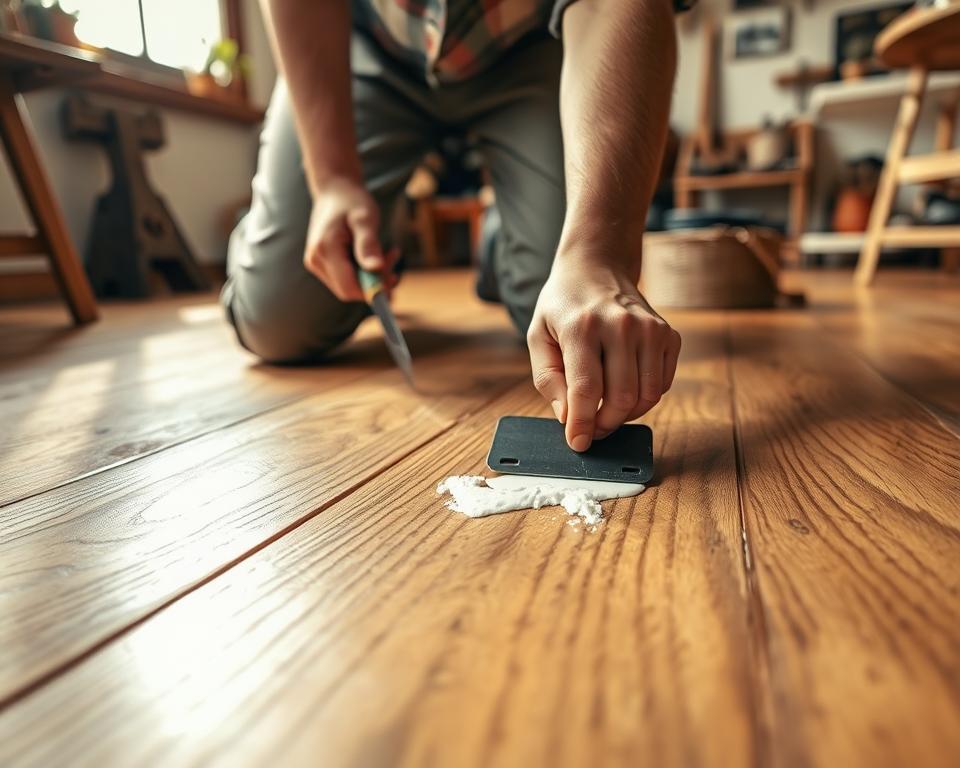
Applying wood filler needs skill and patience. Clean the area around the gap first. Then, use a putty knife to press the filler into the gap. Let it dry as the instructions say, then sand it smooth.
“The key to a successful repair is not just filling the gap but ensuring that the filler is properly integrated with the surrounding floor surface.”
After sanding, check if the area is even. If not, add more filler. Finish the area to match the rest of the floor, by staining or sealing it.
By following these steps and picking the right wood filler, you can fix squeaky floorboards. Your floor will be quieter and more stable.
Benefits of Adding More Supports
Adding more supports is a great way to silence squeaky floors. It not only reduces squeaks but also makes your floorboards more stable.
Without enough support, floorboards creak and squeak. Adding more supports spreads the weight evenly. This reduces the friction that causes squeaks.
Installing Additional Joists
Installing more joists is a highly effective method for supporting floorboards. Joists are the horizontal structures under the floorboards. They provide the necessary support. If joists are too far apart or weak, floorboards sag or squeak.
To add more joists, measure the distance between the existing ones. Then, decide where to place the new ones. Make sure the new joists are level with the old ones for even support.
- Measure the distance between the existing joists to determine the optimal spacing for the new joists.
- Cut the new joists to the appropriate length, ensuring they fit snugly between the beams.
- Secure the new joists in place using appropriate fasteners, such as nails or screws.
Using Blocking for Enhanced Stability
Blocking is another way to make your floorboards more stable. It involves placing small pieces of wood between the joists. This prevents the joists from twisting or warping.
To use blocking effectively, you should:
- Cut small blocks of wood to fit between the joists, ensuring a tight fit.
- Install the blocks in a staggered pattern to maximize support.
- Secure the blocks in place using nails or screws, making sure they are firmly attached to the joists.
By using these strategies, you can greatly improve your floor’s stability. This leads to a quieter and more durable floor.
Understanding Different Types of Floors
Knowing what kind of floor you have is the first step to fix squeaks. Each floor type squeaks and fixes differently.
Differences in Squeaks for Hardwood vs. Laminate
Hardwood and laminate floors are common, but they squeak in different ways. Hardwood squeaks because of wood expansion and contraction with humidity changes. Laminate squeaks because of plank movement or between laminate and subfloor.
For hardwood, a wood floor lubricant or talcum powder can help. Laminate might need plank adjustment or a special repair kit. A guide on silencing squeaky floors says knowing these differences is essential.
Role of Carpet in Squeaky Floors
Carpet can hide squeaks but also cause them. Carpet movement over squeaky subfloors can make noise. It also makes finding squeaks harder.
To fix squeaks under carpet, you might need to look at the subfloor. This could mean removing the carpet. Use a carpet-friendly fix that won’t harm the carpet. For example, lubricating the subfloor or tightening floorboards can help.
In summary, knowing your floor type is key to fixing squeaks. Whether it’s hardwood, laminate, or carpet, the right solution can silence squeaky floors.
Preventative Measures to Avoid Future Squeaks
Keeping your floors squeak-free is possible with regular care and attention to the environment. By acting early, you can lower the chance of squeaks in your floorboards.
Regular Maintenance Tips
Keeping up with maintenance is essential to avoid squeaks. Here are some tips to keep your floorboards in top shape:
- Regularly check your floorboards for any wear or damage.
- Tighten loose screws or nails to stop floorboard movement.
- Use a wood floor cleaner to keep the floorboards clean and debris-free.
By sticking to these easy maintenance tips, you can stop squeaks before they start.

Humidity Control and Its Importance
Humidity greatly affects your floorboards. Wood expands and contracts with humidity changes, causing squeaks.
To keep your environment stable, consider these steps:
- Use a humidifier in dry seasons to keep humidity steady.
- Avoid extreme temperatures that cause wood to shrink or expand too fast.
- Make sure your home has good ventilation to prevent moisture buildup.
By controlling humidity and keeping your environment stable, you can lower squeak risks in your floorboards.
These preventative steps not only help silence creaky floors but also extend your floorboards’ life. Remember, Fixing Squeaky Floorboards is simpler when you prevent squeaks from happening in the first place.
When to Seek Professional Help
Many squeaky floorboards can be fixed on your own. But, there are times when you need a pro. If you’re not sure why it squeaks or if it won’t stop after trying to fix it, it’s time to call a professional.
Identifying Serious Flooring Issues
Some squeaks are just a sign of bigger problems. If you see uneven flooring or signs of damage, you need help fast. This can save your home from more damage.
Here are signs you need a pro:
- Squeaks that are loud and don’t stop
- Water damage or rot that’s visible
- Floors that are uneven or sagging
Flooring experts say ignoring these signs can lead to big problems. This can cost a lot to fix.
“The longer you wait to address squeaky floorboards, the more likely you are to face more extensive and expensive repairs.”
Finding the Right Flooring Specialist
Finding the right flooring specialist is key. Start by asking friends, family, or checking online reviews. Make sure they know how to work with your flooring type.
Here’s how to find the right one:
- Check if they’re licensed and certified
- Look at their work and ask for references
- Get quotes from different people to compare
By following these steps, you can find a good professional. They’ll fix your squeaky floorboards right.
Personal Experience: My Journey Fixing Floorboards
My journey with DIY squeaky floorboards was both tough and rewarding. I learned that fixing squeaky floors is more than just stopping the noise. It’s about finding and fixing the real problems.
Step-by-Step Process of My Repairs
The first thing I did was to find where the squeak was coming from. I walked on the floorboards, listening closely to find the squeaky spots. After finding them, I looked under the floorboards to see why they were squeaking.
I tried different methods to fix it. I used screws to hold down loose boards and wood glue for extra strength. For squeaks caused by boards rubbing together, I used talcum powder to quiet them down.
- Secured loose floorboards with screws
- Applied wood glue for stability
- Used talcum powder to reduce friction
The Challenges I Encountered
One big challenge was getting to the subfloor in some spots. This meant crawling under the house, which was hard and needed creative solutions for lighting and tools.
Another issue was the uneven floorboards. Some were not only squeaky but also uneven, so I had to do extra work to make them even.
This experience taught me the value of patience and determination in squeaky floor fix projects. It’s not just about fixing the squeak right away. It’s about making sure the fix lasts a long time.
Final Thoughts on Fixing Squeaky Floorboards
Fixing squeaky floorboards is easy with the right tools and techniques. We’ve looked at many ways to stop squeaks and make your home quiet again.
Effective Techniques Recap
Using baby powder or talcum powder can help. You can also secure loose boards with screws. Wood glue adds stability, which can stop squeaks and creaks.
Empowering DIY Enthuasiasts
I’ve shared how I fixed my floorboards. I want you to try it too. With patience and the right help, you can fix squeaky floors and make your home more comfortable.
By using these solutions, you won’t just solve the problem now. You’ll also avoid future issues.