

Did you know the right jigsaw blade can make your cuts 30% more accurate? With so many options, picking the best can feel daunting. I’ve worked with many blades and will share my tips to help you choose.
We’ll explore the various jigsaw blades, their materials, and tooth designs. This will help you make a smart choice. By the end, you’ll know how to pick the perfect blade for your projects.
Key Takeaways
- Understand the different types of jigsaw blades and their applications.
- Learn how to choose the right blade material for your project.
- Discover the importance of tooth design in jigsaw blades.
- Gain insights into optimizing your jigsaw blade selection.
- Make informed decisions with our comprehensive guide.
Understanding Jigsaw Blades and Their Uses
Learning about jigsaw blades is essential for getting the most out of your jigsaw. The blade is a key part that affects the quality and accuracy of your cuts. It matters a lot, whether you’re cutting wood, metal, or plastic.
What is a Jigsaw Blade?
A jigsaw blade is a thin, flexible metal strip with teeth. It’s made for cutting different materials. It attaches to the jigsaw through a shank, which can be U-shaped or T-shaped.
The type of shank is very important for compatibility. It makes sure the blade fits well and stays in place.
Jigsaw blades vary in length, thickness, and tooth pattern. Each is designed for specific tasks. The material of the blade, like high-speed steel or carbide, affects its performance and how long it lasts.
Common Applications of Jigsaw Blades
Jigsaw blades are great for many tasks, like curved, straight, and plunge cuts. They’re perfect for making precise cuts in tight spots. They’re a must-have for both pros and DIY fans.
They’re used for many things, like cutting wood for furniture, metal for plumbing, or plastic for crafts. The right blade can make your cuts smooth and accurate. This means you might not need to do extra work to finish them.
Types of Jigsaw Blades
The world of jigsaw blades is full of variety. You can find many materials and designs for different cutting tasks. Knowing the types of jigsaw blades is key to picking the right one for your project.
U-Shank vs. T-Shank Blades
Jigsaw blades have two main types: U-Shank and T-Shank. U-Shank blades are older and simpler. T-Shank blades are newer and fit more securely in the jigsaw, making them safer to use.
When choosing between U-Shank and T-Shank blades, think about your jigsaw’s compatibility and the safety you need during cuts.
Special Purpose Blades
Some jigsaw blades are made for special purposes. They can cut curves, make plunge cuts, or even help with demolition. These blades have special features like unique tooth designs or strong materials for tough tasks.
Bi-Metal vs. High-Speed Steel
The material of a jigsaw blade affects its performance and how long it lasts. Bi-metal blades mix two metals: high-speed steel for the teeth and a flexible alloy for the back. This mix balances durability and flexibility. High-Speed Steel (HSS) blades are hard and keep their sharpness well, making them good for cutting hard materials.
| Blade Type | Material | Best For |
|---|---|---|
| Bi-Metal | Combination of HSS and flexible alloy | General-purpose cutting, balancing durability and flexibility |
| High-Speed Steel | HSS | Cutting tough materials, maintaining sharpness |
Knowing these differences helps you choose the best jigsaw blade for your needs. Whether you need precision or can handle tough tasks, there’s a blade for you.
Choosing the Right Blade Material
The material of your jigsaw blade is key to its performance and life span. Each material has its own benefits and drawbacks. It’s important to pick the right one for your needs.
Steel Blades: Pros and Cons
Steel blades are very common. They strike a good balance between price and performance. Here are the pros:
- Affordability
- Available in many sizes
- Good for general cutting
But, there are also some cons:
- Prone to wear and tear
- Not great with very hard materials
- Can break easily
Carbide Blades: When to Use Them
Carbide blades are super durable. They’re perfect for cutting through hard stuff. They cost more than steel but have big advantages:
- Last longer
- Can cut through hard materials
- Resistant to wear
Use carbide blades for cutting through metal or very hard wood.
Titanium-Coated Blades: Durability Factor
Titanium-coated blades are a mix of durability and cost. The titanium coating helps them last longer than steel. They’re:
- More resistant to corrosion
- Less prone to wear
- Good for many materials
They’re a smart choice if you want good performance without spending too much.
In summary, picking the right jigsaw blade material depends on your needs and projects. Knowing the pros and cons of each helps you make the best choice.
Blade Tooth Designs Explained
Jigsaw blades have a special tooth design that affects how well they cut. These teeth are made to remove material efficiently. The way they are arranged can greatly change the quality of the cut.
TPI (Teeth Per Inch) Overview
The Teeth Per Inch (TPI) rating is key in jigsaw blade design. It shows how many teeth are on a blade per inch. A higher TPI means finer teeth, perfect for cutting thin materials or getting smooth finishes.
For example, a high TPI blade is great for cutting metal or making precise wood cuts. But, a lower TPI is better for thicker materials or rough cuts.
Different Tooth Designs and Their Uses
Jigsaw blades have various tooth designs for different tasks. Some common ones include:
- Variable TPI: These blades have teeth that change along their length. They’re good for cutting different materials efficiently.
- Hook-Tooth Design: This design has aggressive, hook-like teeth. It’s perfect for fast cuts in wood and soft materials.
- Reverse-Tooth Design: Some blades have teeth angled the opposite way. This helps reduce splintering when cutting certain materials.
How Tooth Design Affects Cut Quality
The tooth design of a jigsaw blade greatly affects the cut quality. A well-designed blade can make a smooth, accurate cut. But, a bad design can lead to a rough or uneven finish.
For example, using the right TPI for the material being cut usually results in a better finish. The tooth design also impacts vibration and noise during cutting. Some designs are better for smooth operation.
Selecting Blades for Different Materials
To get the best out of your jigsaw, it’s essential to choose blades tailored to the material at hand. Different materials require jigsaw blades with specific features to ensure optimal performance and compatibility.
Wood Blades: Features and Benefits
When cutting wood, you need blades that can handle the density and texture of the material. Wood jigsaw blades typically have a coarse tooth design. This helps in removing material quickly and efficiently. They are ideal for both straight and curved cuts in wood.
For cleaner cuts, it’s advisable to use blades with a higher TPI (Teeth Per Inch) count. But for rough cuts or thicker wood, a lower TPI can be more effective.
Metal Cutting Blades: What to Look For
Cutting metal requires blades with a different set of characteristics. Metal cutting jigsaw blades are designed with a finer tooth design. They handle the hardness of metal well. They are typically made from high-speed steel or bi-metal to withstand the heat and friction generated during the cutting process.
When selecting a metal cutting blade, look for ones with a high TPI count for smoother cuts. It’s also important to ensure the blade is compatible with your jigsaw to avoid any operational issues.
Tile and Ceramic Cutting Blades
For cutting tile and ceramic, specialized blades are available. Tile and ceramic cutting blades usually have a diamond-coated edge. This provides a clean cut without chipping the material.
These blades are designed to minimize the risk of cracking the tile or ceramic. They ensure a professional finish.
| Material | Blade Type | TPI Count | Special Features |
|---|---|---|---|
| Wood | Coarse Tooth | 6-10 | Aggressive cut, suitable for thick wood |
| Metal | Fine Tooth | 14-24 | Made from high-speed steel or bi-metal |
| Tile/Ceramic | Diamond-Coated | N/A | Reduces chipping, ideal for brittle materials |
Blade Length Considerations
Choosing the right jigsaw blade length is key for good cuts and project success. The blade’s length affects the quality of your cuts and how easy it is to use the saw.
Think about the material’s thickness and type when picking a jigsaw blade. For thicker materials, a longer blade is needed for a clean cut. Thinner materials can be cut with shorter blades.
Standard Blade Lengths
Jigsaw blades come in lengths from 2 to 12 inches. The most common are 3, 4, and 6 inches. Choosing the right length depends on your project’s needs.
- Shorter blades (2-3 inches) are great for curved cuts and detailed designs.
- Medium blades (4-6 inches) are versatile for most cutting tasks.
- Longer blades (8-12 inches) are best for cutting thick materials and straight cuts.
How Length Affects Performance
The blade’s length impacts its performance in several ways:
- Flexibility and Stability: Longer blades may flex more, leading to less accurate cuts. Shorter blades offer better control but might not work for thick materials.
- Cutting Depth: The blade’s length limits the maximum cutting depth. Make sure the blade is long enough for one pass through the material.
- Blade Stress: Using a blade that’s too long or too short can stress the blade, causing wear or breakage.
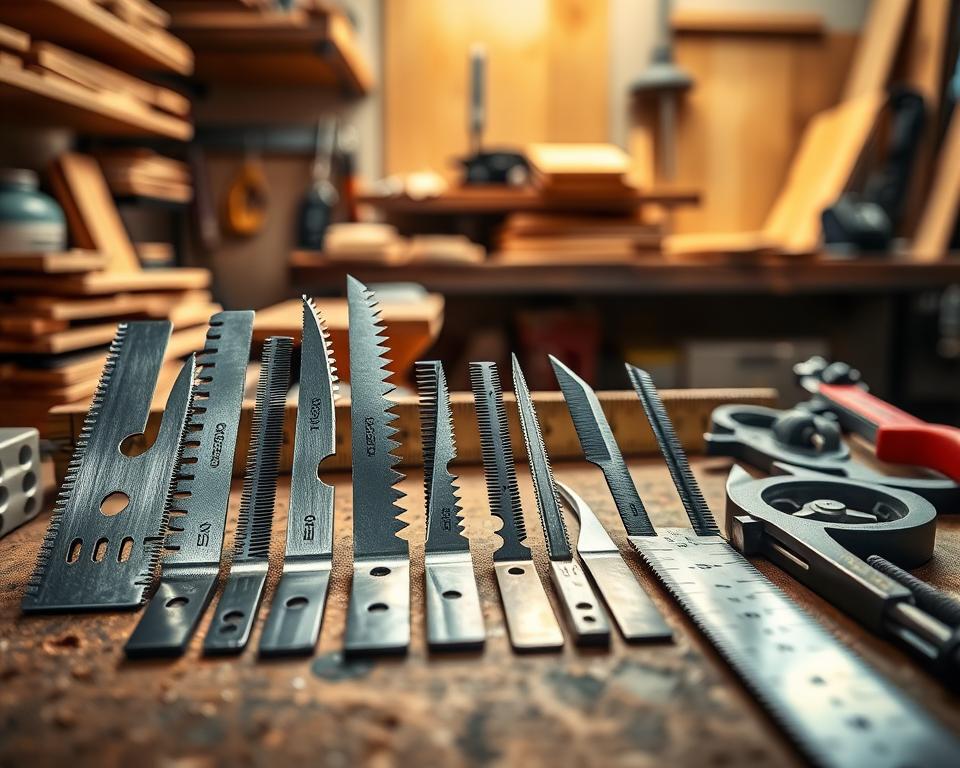
In conclusion, knowing the importance of jigsaw blade length is vital for great results in your projects. By picking the right length, you’ll improve your cutting experience and get precise, clean cuts.
Blade Thickness and its Impact
Knowing how blade thickness affects your jigsaw is key to getting great results. The thickness of a jigsaw blade impacts both the accuracy of your cuts and how steady the blade stays while cutting.
When picking a jigsaw blade, it’s important to think about whether to go for a thin or thick blade. Thin blades are flexible, perfect for curved cuts and detailed designs. In contrast, thick blades are more stable, great for straight cuts and when you need a blade that doesn’t wobble.
Thin vs. Thick Blades: Which to Choose?
Deciding between a thin and thick blade depends on your project’s needs. For curved cuts or detailed work, a thin blade is usually the best choice. A pro woodworker says, “Thin blades are flexible, making them ideal for smooth, controlled cuts in complex patterns.” But for straight cuts or cutting through thick materials, a thicker blade is better because it stays straight and stable.
Effects on Precision and Stability
The thickness of a jigsaw blade affects both precision and stability. Thin blades are flexible but might vibrate more, which can lower precision. Thick blades, being more stable and less likely to vibrate, improve precision for straight cuts. As I always say, “The right blade thickness is key to balancing flexibility and stability for your specific cutting needs.”
In short, understanding how blade thickness affects your jigsaw’s performance is vital for making high-quality cuts. By choosing the right blade thickness for your project, you can get both precision and stability. This will make your cutting experience better overall.
Safety When Using Jigsaw Blades
When working with jigsaw blades, safety comes first. It begins with picking the right blade. Using a jigsaw can be safe and efficient for cutting different materials. But, you must pay close attention and follow safety rules.
Importance of Using the Right Blade
Choosing the correct jigsaw blade is key for safe use. The right blade helps make precise cuts, lowering accident risks. A wrong blade can cause blade breakage, kickback, or loss of control, which might hurt you.
- Choose a blade that fits the material you’re cutting.
- Make sure the blade works with your jigsaw model.
- Use blades with the right tooth design for your task.
Tips for Safe Operation
To safely use a jigsaw, follow these tips:
- Wear protective gear, like safety glasses and gloves, to avoid debris and blade contact.
- Keep your work area clean and free of clutter to avoid accidents.
- Use a steady, stable work surface to keep control over the jigsaw.
- Keep your fingers away from the blade’s path and avoid reaching under the workpiece.
By following these tips and picking the right jigsaw blade, you can greatly lower injury risks. Safety is an ongoing effort that needs constant attention and detail.
Maintenance Tips for Longevity
Proper care and maintenance of your jigsaw blades are key for optimal performance and longevity. By following a few simple tips, you can extend the life of your blades. This ensures they continue to deliver high-quality cuts.
Cleaning Your Jigsaw Blades
Cleaning your jigsaw blades regularly is vital. It removes debris and residue that can affect their performance. To clean your blades, start by removing them from the jigsaw.
Use a soft brush or cloth to gently sweep away any visible sawdust or particles. For more thorough cleaning, mix a mild detergent with water. Dip a soft cloth into the solution, wring it out thoroughly, and wipe down the blade.
Avoid using harsh chemicals or abrasive materials that could damage the blade.

Signs a Blade Needs Replacement
Even with proper maintenance, jigsaw blades will eventually need to be replaced. Here are some signs that indicate it’s time for a new blade:
- Inconsistent or rough cuts
- Visible wear or damage on the blade teeth
- Increased vibration or noise during operation
- Reduced cutting efficiency or speed
When you notice any of these signs, it’s time to consider replacing your jigsaw blade. Choosing a high-quality blade from reputable jigsaw blade brands can make a significant difference in performance and longevity.
By maintaining your jigsaw blades properly and knowing when to replace them, you can ensure your jigsaw continues to perform at its best. Regular maintenance not only extends the life of your blades but also enhances the overall quality of your work.
Innovative Jigsaw Blade Technologies
The jigsaw blade industry is seeing big changes in technology and design. These changes mean better performance, longer-lasting blades, and more versatility for users.
Recent Developments in Blade Design
New years have brought big steps in jigsaw blade design. Advances in materials science and manufacturing have played a big role. For example, bi-metal blades are now popular because they can handle high temperatures and stay sharp longer.
There’s also a new range of specialized blades for specific tasks. These blades are made for cutting curves in metal or making precise cuts in wood. They have unique designs that make these tasks easier.
Future Trends in Jigsaw Blades
The future of jigsaw blades looks exciting. One big trend is the use of advanced materials like carbide and diamond-coated blades. These materials make blades last longer and work better.
Another trend is the development of smart blades. These blades can sense what material they’re cutting and adjust their settings. This could change how we use jigsaw blades, making cuts more precise and reducing mistakes.
| Trend | Description | Benefits |
|---|---|---|
| Advanced Materials | Use of carbide and diamond-coated blades | Enhanced durability and performance |
| Smart Blades | Blades that detect material and adjust cutting parameters | Improved precision and reduced error risk |
| Specialized Blades | Blades designed for specific tasks and materials | Increased versatility and efficiency |
Using a Jigsaw Blade Efficiently
To get the most out of your jigsaw, learn how to use its blade well. Knowing how to use best jigsaw blades is key for top-notch cuts.
One basic skill is making straight cuts. Make sure your work is clamped down tight. This keeps it steady while you cut. Line up the blade with your cut and start slow, then speed up as you go. Use light, steady pressure to keep the blade on track.
Techniques for Straight Cuts
For straight cuts, a guide or fence on your jigsaw is a big help. It keeps the blade right where you want it. Also, keep your best jigsaw blades sharp and clean. Dull or dirty blades can mess up your cut.
Making Curved Cuts with Ease
Curved cuts need a different touch, focusing on flexibility and control. Use a curved-cutting blade, which is thinner and more flexible. Start with a pilot hole if cutting from the inside, then insert the blade and cut slowly along your curve.
Adjust your jigsaw’s speed and angle as you curve. Making relief cuts before a tight curve helps, too. It eases the stress on the blade and helps it follow your path better.
Mastering these techniques and using the best jigsaw blades will boost your cutting skills. You’ll get better at both straight and curved cuts.
My Personal Recommendations
I’ve looked into jigsaw blades and I’m ready to share my top picks. Choosing the right jigsaw blade is key to great results. The brand you pick can really make a difference.
Top Brands to Consider
Look into brands like Bosch, DeWalt, and Lenox for quality blades. Bosch is known for durable, precise blades. DeWalt has a wide range for different tasks.
Budget-Friendly vs. Professional Options
Think about how often and what you’ll be using the blade for. For light use, Black+Decker or Skil might be enough. But for heavy or professional work, Bosch or DeWalt blades are better.