
Did you know nearly 70% of U.S. households have stainless steel appliances? These appliances make our kitchens look sleek. But, they can get scratched easily.
Removing scratches from stainless steel is simpler than you might think. With the right tools and techniques, you can fix scratches and avoid new ones. Let’s explore how to make those scratches vanish.
Restoring your stainless steel appliances is easy with a few DIY steps. You can do it yourself.
Key Takeaways
- Identify the type of scratch on your stainless steel surface
- Choose the right stainless steel scratch remover for the job
- Learn a simple DIY method to repair scratches
- Understand how to prevent future scratches
- Discover tips for maintaining your stainless steel appliances
Understanding Stainless Steel Scratches
Knowing how to deal with stainless steel scratches is key. Scratches can happen for many reasons. Finding out why they occur is the first step to fixing them.
What Causes Scratches on Stainless Steel?
Scratches can come from daily wear and tear, harsh cleaning, or accidents. For example, using a rough scrubber or moving heavy pots and pans can scratch the surface. Knowing these causes helps prevent them.
Some common reasons for scratches include:
- Using abrasive cleaners or scrubbers
- Accidental impacts or drops
- Sliding heavy objects across the surface
Common Areas Prone to Scratches
Some spots are more likely to get scratched because of how we use them. Kitchen countertops, appliances, and sinks are often scratched. Checking these areas often can help catch and prevent deep scratches.
| Area | Common Cause of Scratches | Prevention Tip |
|---|---|---|
| Kitchen Countertops | Sliding pots and pans, using abrasive cleaners | Use trivets or mats under pots and pans, clean with soft cloths |
| Appliances | Accidental impacts, improper cleaning | Handle appliances with care, use recommended cleaning products |
| Sinks | Using abrasive scrubbers, dropping heavy objects | Clean with soft scrubbers, avoid dropping heavy items |
By knowing why scratches happen and where they often appear, you can prevent them. This keeps your stainless steel surfaces looking good.
Necessary Tools and Materials for Cleaning
To clean stainless steel scratches well, you need the right tools and materials. First, know what products and tools work best for the job.
Recommended Cleaning Products
Choosing the right cleaning products is key for stainless steel. Use gentle, non-abrasive cleaners made for stainless steel. Options include:
- Mild soap and water
- Specialized stainless steel cleaners
- White vinegar diluted with water
Avoid harsh chemicals and abrasive cleaners as they can harm the surface. Always check the product label to make sure it’s safe for stainless steel.
“The key to maintaining stainless steel is using the right cleaning products. Harsh chemicals can do more harm than good.”
Tools for Repairing Scratches
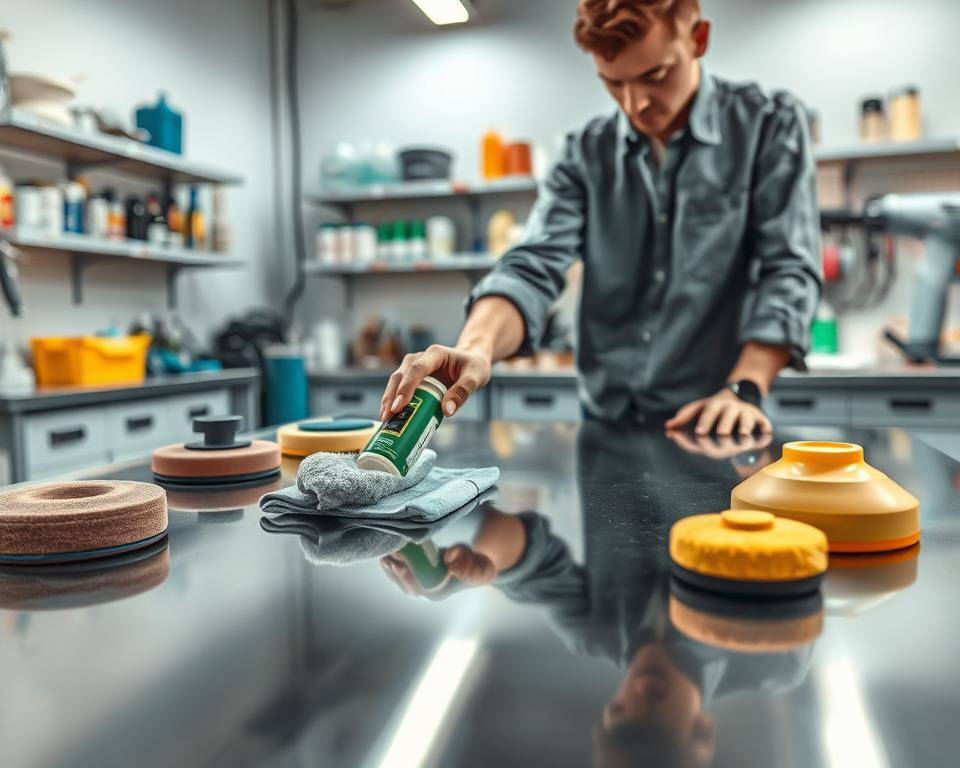
For serious scratches, you’ll need more tools to fix and shine the stainless steel. Useful tools include:
| Tool | Purpose |
|---|---|
| Soft Cloths | Gentle cleaning and drying |
| Scrubbers | Removing stubborn stains and grime |
| Buffing Wheels | Polishing and removing minor scratches |
For deeper scratches, a scratch repair kit is a must. These kits have abrasives and polishes to fix the scratch and shine the surface.
In summary, having the right tools and materials is key for cleaning and fixing stainless steel scratches. By picking the right products and using the right tools, you can keep your stainless steel looking great.
Steps to Clean Minor Scratches
The secret to removing minor scratches from stainless steel is in the prep and clean. Follow these steps to bring back the shine to your stainless steel.
Preparing the Surface
First, clean the surface. Use a soft, dry cloth to wipe away dirt or dust. This makes sure your cleaning targets the scratches, not dirt.
Then, mix warm water with mild dish soap. Soak a cloth in it, squeeze it out, and clean the scratch. This removes dirt that makes the scratch look worse.
Cleaning Techniques I Use
For small scratches, a simple trick works. Use a stainless steel cleaner or water and white vinegar on a soft cloth. Rub the scratch in the grain direction to avoid more damage. This is a key part of DIY stainless steel scratch repair.
After using the cleaner, dry the area with a cloth. If the scratch is not gone, you might need to do it again or use a special product.
By following these steps and using the right methods, you can remove scratches from stainless steel and keep it looking great.
How to Repair Deeper Scratches
Fixing deeper scratches on stainless steel needs some effort. But, with the right methods, it’s doable. Deeper scratches can look bad and harm the surface if not fixed right.
Sanding and Buffing Techniques
To fix deeper scratches, start with sanding and buffing. First, clean the area around the scratch to get rid of dirt. Then, use fine-grit sandpaper to sand the scratch in its direction.
If the scratch is really deep, you might need to use higher grits for a better finish.
- Start with a lower grit (around 120) for deeper scratches.
- Progress to higher grits (220 or higher) for a smoother finish.
- Always sand in the direction of the scratch to avoid further damage.
After sanding, buff the scratch with a buffing wheel or a soft cloth and stainless steel polish. This step blends the repaired area with the rest of the surface, making the scratch less visible. For more on polishing, check out this guide on removing scratches from stainless steel appliances.
Using a Scratch Repair Kit
If the scratch is very deep or big, a scratch repair kit might be best. These kits have a compound to fill the scratch and a tool to smooth it out. To use a kit, follow the instructions from the maker.
- Apply the repair compound to the scratched area, making sure it covers it fully.
- Use the buffing tool to smooth out the compound, blending it towards the edges.
- Check the area and repeat if needed until the scratch is filled and smooth.
By following these steps and using the right tools, you can fix deeper scratches on stainless steel surfaces. This will bring back their original look and keep them durable.
The Role of Polishing in Scratch Removal
Polishing can greatly help in removing scratches and restoring shine to stainless steel. It’s not just a final step; it’s a key part of the process.
Choosing the Right Polish for Stainless Steel
Choosing the right polish for stainless steel is vital. Use a polish made for stainless steel to match its unique properties. Stainless steel polishes can remove scratches and give a shiny finish.
Consider the scratch type when picking a polish. A gentle polish works for minor scratches, but deeper ones need a stronger one. Always check the label and follow the instructions for the best results.
How to Polish Effectively
To polish well, apply a small amount of polish to a soft cloth. Rub it into the scratch with circular motions. Make sure to cover the whole area but don’t press too hard to avoid new scratches.
For tough scratches, a rotary polisher or buffer might be needed. But use these tools carefully to avoid damaging the steel.
Patience is key when polishing. With the right polish and effort, you can fix scratches and make your stainless steel shine again.
Preventing Future Scratches
To keep your stainless steel surface scratch-free, it’s important to know how to prevent scratches. By using the right habits and being careful with your stainless steel, you can lower the chance of scratches.
Tips for Safe Use and Maintenance
When handling your stainless steel, be gentle. Always use soft cloths or sponges for cleaning to avoid scratches. Don’t use harsh cleaners or scrubbers that can harm the steel. When moving heavy items, lift them instead of dragging to prevent scratches.
Also, watch what you put on your stainless steel surfaces. Don’t place sharp objects directly on it. Use placemats or trays under items that could scratch the surface.
Regular Cleaning Habits I Follow
Cleaning your stainless steel regularly is key to keeping it looking good and scratch-free. I clean mine often with a mild detergent and warm water. Dry the surface thoroughly after cleaning to avoid water spots.
For stubborn stains or grime, a stainless steel cleaner can help. Always read the instructions and test it on a small area first to make sure it won’t damage the surface.
By following these tips and keeping up with regular cleaning, you can prevent future scratches. This way, your stainless steel surfaces will stay in great condition.
Using Household Items to Clean Scratches
Before you buy commercial cleaners, try using things you already have at home. I’ve found that common household items can work well for DIY stainless steel scratch repair.
Baking Soda Paste: A Simple Solution
For stainless steel scratch removal techniques, make a paste with baking soda and water. Mix 1 tablespoon of baking soda with 2 tablespoons of water. Apply this paste to the scratch and rub it gently with a soft cloth, following the scratch’s direction.
“Baking soda’s abrasive nature can buff out minor scratches without harming the stainless steel,” cleaning experts say. Rinse the area with warm water and dry it with a clean towel after rubbing the paste.
Vinegar and Olive Oil Method
Another good way to buff out stainless steel scratches is with vinegar and olive oil. First, clean the area with mild detergent and dry it well. Then, apply olive oil to the scratch and rub it in with a soft cloth. For tougher scratches, a bit of white vinegar can help.
- Mix equal parts of olive oil and white vinegar in a small bowl.
- Dip a soft cloth into the mixture and wring it out well.
- Rub the mixture into the scratch in a circular motion.
- Buff the area with a clean, dry cloth to remove excess oil and vinegar.
These household items not only remove scratches but also protect the stainless steel. They make it shine and reduce future scratches.
When to Call a Professional
Not all scratches on stainless steel can be fixed at home. Sometimes, you need a pro. I’ve fixed minor scratches myself, but deep or large damage needs a pro.
Signs That Require Expert Help
If you see these signs, it’s time to call a pro:
- Deep scratches that go beyond the surface
- Scratches covering a big area
- Scratches with dents or warping
A pro can check the damage and decide if you need repair or replacement. They make sure your stainless steel lasts long.
Benefits of Professional Services
Choosing a pro for scratch repair has many advantages:
| Benefit | Description |
|---|---|
| Expertise | Professionals know how to fix tough repairs with the best way to repair stainless steel scratches. |
| Quality Results | They use special tools and methods, like a stainless steel scratch remover, for lasting results. |
| Time-Saving | Getting a pro saves you time and effort. It’s a smart choice for fixing stainless steel surface scratches. |
Knowing when to get help ensures your stainless steel stays in top shape. It keeps it looking good and lasting long.
Frequently Asked Questions
I’ve had my share of dealing with stainless steel scratches. I’ve gathered answers to common questions. Cleaning stainless steel can raise many questions about the best methods and safety.
How Can I Tell If a Scratch is Minor or Deep?
Figuring out if a scratch is minor or deep is easy. Minor scratches feel like a fingernail scratch.
Minor scratches are hard to see and feel. But, if a scratch is deep, it will catch your nail. A simple test is to run your fingernail over the scratch. If it catches, it’s deep and might need more than just cleaning.
Is it Safe to Use Abrasive Cleaners?
Using abrasive cleaners on stainless steel is risky. They might remove scratches but can also harm the surface if not used right.
Always read the label and choose cleaners made for stainless steel.
“The key to safely using abrasive cleaners is to follow the manufacturer’s instructions and test them on a small, inconspicuous area first.”
For minor scratches, a soft cloth and mild detergent might do the trick. For tougher scratches, a gentle scrubber or a mild abrasive product might be needed. Remember, “Prevention is better than cure.” Regular cleaning and care can prevent scratches from happening.
Conclusion: My Experience with Stainless Steel Care
Restoring stainless steel surfaces to their original shine is achievable with the right techniques and materials. Through my experience, I’ve found that cleaning stainless steel scratches requires patience. It also needs the right cleaning products and a few simple tools.
Effective Scratch Removal Techniques
For minor scratches, a gentle cleaning product and a soft cloth can be effective. For deeper scratches, using a stainless steel scratch remover or sanding and buffing techniques can help. To maintain the shine, polishing is essential. Using the right polish for stainless steel is also key.
Empowering DIY Cleaning and Repair
By following the steps outlined in this guide, you can confidently tackle DIY cleaning and repair projects. Whether it’s using household items like baking soda paste or vinegar and olive oil, or opting for a stainless steel scratch remover, you have the tools to restore your stainless steel surfaces. Learning how to polish stainless steel scratches is also a valuable skill. It helps maintain the appearance of your stainless steel appliances and fixtures.