

A torn window screen is not just a cosmetic issue. It can also let pests in and make your home less energy-efficient. But, fixing it is simpler than you might think.
In this article, I’ll show you how to fix torn screens easily. You’ll learn to mend tears, replace damaged mesh, and get your windows working right again.
This project is easy to do at home. You don’t need special tools or a lot of time.
Key Takeaways
- Learn the simple steps to repair a torn window screen.
- Understand the tools needed for the job.
- Discover how to patch tears and replace damaged mesh.
- Get tips on maintaining your window screens.
- Find out how fixing your screens can improve home energy efficiency.
Understanding the Importance of Window Screens
Window screens are key to making our homes more comfortable and energy-efficient. They do more than just keep bugs out. They play a big role in our daily lives.
I love my window screens for many reasons. They let in fresh air while keeping bugs out. This natural breeze helps keep my home cool without using too much air conditioning.
Why I Value My Window Screens
Window screens help my home use less energy. By opening windows, I don’t need to cool my home as much. This saves on energy costs.
They also keep pests out. This is really important when it’s hot and I leave my windows open.
Common Issues I Face with Screens
But, window screens can get damaged. Tears and holes are common. A torn screen lets bugs in, which defeats its purpose.
Here’s a table showing some common problems:
| Issue | Cause | Impact |
|---|---|---|
| Tears and Holes | Physical damage, pets, or strong winds | Allows insects to enter, reduces ventilation efficiency |
| Dirt and Debris Accumulation | Lack of maintenance, environmental factors | Reduces airflow, obstructs view |
| Warped or Loose Frames | Aging, improper installation | Compromises screen integrity, affects appearance |
Many things can harm window screens. Keeping them in good shape is important.
Knowing how important window screens are helps us take better care of them. As homeowners, we should value them. This ensures they keep working well for us.
Tools and Materials Needed for Repair
Fixing a screen right means having the right tools and materials. With the right stuff, you can fix it well and make it last.
Essential Tools I Keep Handy
You’ll need some basic tools for most screen fixes. A utility knife or scissors for cutting, a spline roller for securing, and a flathead screwdriver for removing screens. Good tools make fixing easier and faster.
Also, a measuring tape is key for accurate measurements. And some cloth or a brush for cleaning. These help get the screen ready and ensure a perfect fit.
Recommended Screen Repair Materials
Choosing the right materials for screen repair is important. For a budget-friendly fix, fiberglass mesh works well. It’s tough and easy to use. For a high-quality fix, consider aluminum or stainless steel mesh. It lasts longer and resists damage better.
The spline, which keeps the mesh in place, must match the mesh quality. A strong spline keeps the screen tight. A screen repair kit is also a good idea. It comes with everything you need and instructions for an easy fix.
Assessing the Damage
Checking the damage on my window screens is key before fixing them. Knowing how bad the damage is helps me pick the best way to repair it.
Identifying Different Types of Tears
I look closely at the screen to find out what kind of damage it has. There are small punctures, long slits, and large sections torn off. Each needs a different fix.
Small holes might just need a patch. But long slits might need stitching or a bigger patch. If a big part is missing, it might be smarter to get a new screen.
Determining the Repair Method
After figuring out the damage, I decide how to fix it. For small issues, a screen repair kit works well. These kits have patches and stuff to seal the tears.
For bigger problems, I think if I can fix it or if I should get a new one. The screen’s age, material, and how bad the damage is matter.
If it’s too much to fix, I look into getting a new screen. I might need to measure the window to get the right size or find a pre-made screen.
By understanding the damage and picking the right fix, I can make my window screens work right again.
Cleaning the Screen Before Repair
To fix a torn window screen well, it must be clean. Dirt and debris can ruin the repair. A clean screen helps the fix stick better and makes the repair easier.
“A clean slate is essential for any repair work,” many say. This is true, even more so for fixing torn window screens.
Why I Clean My Screen
I clean my screen before fixing it for a few reasons. Dirt can stop the repair material from sticking. Also, a clean screen lets me see the damage clearly. This is key for a lasting repair.
Tips for Effective Cleaning
To clean the screen well, start with a soft-bristled brush to remove loose dirt. Then, use a mild detergent and water to wipe it down. Stay away from harsh chemicals or rough materials that could harm the screen.
For tough dirt, a soft cloth or sponge works. Make sure to rinse the screen well and let it dry before fixing it. These steps help you prepare for a strong repair. Whether you’re fixing it yourself or getting a professional screen repair service, a clean screen is vital.
Basic Repair Techniques
To fix torn screens, knowing basic repair techniques is key. The method you choose can greatly affect the repair’s success and longevity.
There are two main ways to repair torn screens: using screen patching kits and stitching. Each method works best for different types of tears.
Using Screen Patching Kits
Screen patching kits are great for fixing small to medium-sized tears. They come with a patch and an adhesive or spline to hold it in place.
To use a kit, follow these steps:
- Clean the area around the tear for a strong bond.
- Cut a patch a bit larger than the tear.
- Apply the adhesive to the patch and press it firmly over the tear.
- If the kit includes a spline, use it to secure the patch further.
Stitching Torn Screens
For bigger tears or when kits won’t work, stitching is a good option. You’ll need a needle and thread that matches the screen material to sew the tear together.
| Material | Suitability for Stitching | Durability |
|---|---|---|
| Fiberglass | High | Medium |
| Aluminum | Medium | High |
| Pet Screen | Low | Low |
Stitching is best for tears in high-stress areas or where a durable fix is needed. It’s also good for keeping the screen’s original look without visible patches.
To stitch a torn screen, thread your needle with strong thread. Then, sew along the tear, making sure your stitches are tight to avoid more damage.
Learning these basic repair techniques can help keep your window screens in good shape for longer.
Replacing Entire Sections
In some cases, the best way to fix a torn window screen is to replace it. This is true when the tear is big or the screen is old and worn out.
When I Choose to Replace Instead
I decide to replace the screen when the damage is too big to fix. For example, if the tear is near the edge or there are many tears close together, it’s better to replace it. Also, if the screen is old and has been fixed many times, it’s cheaper to get a new one. You can learn more at https://glassexpressrepair.com/repairing-a-torn-window-screen/.
Some signs you should replace instead of repair include:
- A tear bigger than a few inches
- Many tears or holes in the screen
- The screen is old or has been fixed many times before
- The tear is near the edge or corner of the screen
How to Measure for Replacement
To measure for a new screen, I start by taking exact measurements. I measure the screen’s width and length, noting any odd shapes or obstructions. It’s important to be precise for a good fit.
Here’s how I measure for replacement:
- Measure the screen’s width from inner edge to inner edge.
- Measure the screen’s length from inner edge to inner edge.
- Notice any obstructions, like handles or locks.
- Write down your measurements to use when ordering a new screen.
By following these steps, you can make sure your new screen fits perfectly. If you’re not sure about measuring, consider asking a screen repair specialist for help. They offer affordable screen repair services and will make sure it’s done right.

DIY vs. Professional Repair
Choosing between DIY and professional repair for torn window screens is a tough decision. It depends on the damage, my skills, and budget. Both options have their good points.
Weighing My Options: DIY or Hire Help
Doing it myself can save money and feel rewarding. With the right tools and materials, I can fix small tears and holes. But, complex repairs might need special skills and tools, making professional help better.
DIY repairs have some benefits:
- Saving money on labor costs
- Gaining experience and confidence in DIY projects
- Having control over the materials and methods used
Benefits of Professional Repairs
Hiring a pro for screen repair has many advantages. They offer high-quality screen repair skills, ensuring the job is done right. They have the right tools and experience for complex repairs and can do the job faster than I could.
Professional repairs have benefits like:
- Access to high-quality materials and specialized tools
- Expertise in handling complex repairs
- Time-saving, as professionals can complete the job quickly
When looking for a reliable service, finding the best screen repair company in my area is key. I look at customer reviews, prices, and services offered to get the best value.
Tips for Preventing Future Tears
Keeping your window screens in top shape is all about regular care. By following a few easy steps, you can avoid tears and keep your screens working well.
Regular Maintenance I Follow
Keeping your screens in good condition starts with regular checks. I always inspect my screens regularly for any damage. I look for dirt, debris, and weak spots.
Cleaning your screens is also key. I use a soft brush or a damp cloth to clean them. For tough dirt, I might use a mild soap solution. But I always rinse them well to avoid attracting more dirt.
Choosing Durable Screen Materials
The material of your screen is important for avoiding tears. Fiberglass screens are durable and can handle heavy foliage or pets.
For harsh weather or extra security, metal screens like aluminum or stainless steel are better. They’re more durable and can handle tough weather.
- Fiberglass screens are flexible and less expensive.
- Metal screens offer enhanced durability and security.
- Consider the climate and usage when choosing screen material.
By keeping up with maintenance and choosing the right material, you can prevent tears. This way, your window screens will stay functional and effective.
Seasonal Considerations
As the seasons change, window screen care is ongoing. Spring brings debris and pollen, while winter means snow and ice. I adjust my cleaning schedule to match these changes.
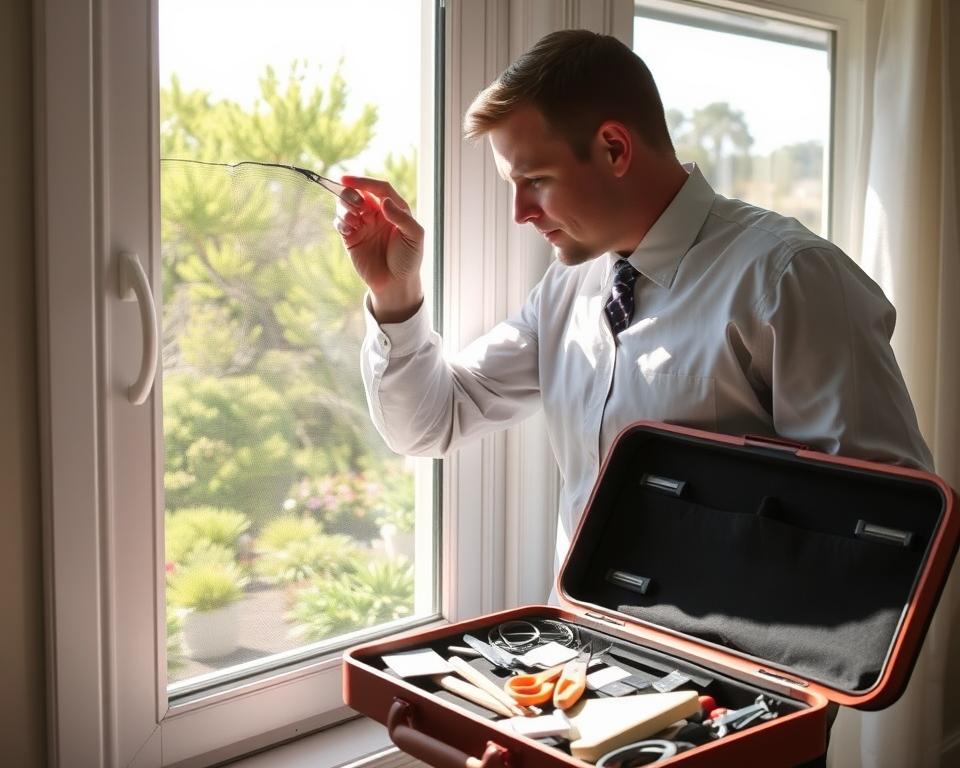
Preparing Screens for Winter
Before winter, I check my screens for damage. This is key because snow and ice can worsen any issues. I clean them well to avoid damage from freezing debris.
If I find tears or holes, I fix them with a patch kit or replace the screen. Sometimes, I hire a professional screen repair service for big repairs.
To shield my screens from winter, I might take them down if possible. Some screens are easy to remove. If not, I make sure windows are closed to keep out snow.
Spring Maintenance Practices
In spring, I check my screens for winter damage. I look for tears or rust and fix them right away. I also clean the screens well to remove winter dirt.
While cleaning, I also inspect the frames for damage. If they’re damaged, I might replace the screens. This is a chance to upgrade to better screens. If I’m not up for it, I look into window screen replacement services.
By following these seasonal tips, my window screens last longer and work better all year.
Customizing My Screen Design
I’ve found that making my window screens unique can really improve my home’s look. By adding a personal touch, I can make them eye-catching while keeping their function.
Adding Color or Patterns to Screens
I like to add color or patterns to my screens. This can be done with different materials and designs, like fiberglass or aluminum screens. For example, a screen with a special pattern can make my home look more elegant.
When picking a color or pattern, I think about my home’s style. For a modern house, I might choose sleek, black aluminum screens. But for a traditional home, I might go for classic bronze or bronze-anodized aluminum.
Choosing Screen Styles
Choosing the right screen style is key. I can pick from fixed, sliding, or retractable screens, based on my windows’ design and use. For example, retractable screens are flexible and convenient, while fixed screens are more permanent.
To fix torn screens or get a new design, I look at durability, upkeep, and cost. This helps me make a choice that fits my needs and budget. Plus, finding affordable screen repair services can help me get the look I want without spending too much.
When to Consider Full Replacement
Knowing when to replace a window screen is as important as knowing how to fix it. While small repairs can work, some screens are too damaged to fix.
Signs My Screen Needs to Go
Over time, I’ve found certain signs that mean it’s time for a new screen. These include:
- Large tears that can’t be fixed with patches
- Screens that are old or have been damaged many times
- Frames that are warped or rusted, making the screen unstable
If you see any of these signs, it might be time for a new screen. For more info on when to replace window screens, check out this resource.
How I Dispose of Old Screens
When getting rid of old screens, I do it the right way. Here’s what I do:
- First, I check if the screen material can be recycled. Many places offer recycling for old window screens.
- If recycling isn’t an option, I throw the screens away in my regular trash. I wrap them up to prevent injuries.
- I also think about using old screens for other things, like DIY projects or garden covers.
By being careful with how I get rid of old screens, I make sure the repair or replacement process is good for the environment and works well.
Final Thoughts on Screen Repair
Fixing torn window screens is easy with the right tools and patience. Even big tears can be fixed, saving you money and effort. This way, you avoid the need for a full replacement.
Lessons Learned from My Repair Experiences
Last summer, I faced a tough repair. The screen was torn badly. But with a screen patching kit from a top company, I fixed it in under an hour. It felt great to have done it myself and showed me I can handle DIY projects.
Empowering Fellow DIY Enthuasiasts
If you’re new to DIY screen repair, try it out. With practice, you’ll get better and save money. The secret to success is patience and paying attention to details.