

A well-finished woodworking project can make a room look better. Danish Oil is a top pick for woodworkers to get that perfect finish.
Danish Oil combines oil and varnish to make wood look great and protect it. But, applying it right is key to avoid problems like uneven finishes or too much buildup.
As a woodworker, I’ve learned that getting the Danish Oil Application right is essential for a smooth, top-notch finish. In this article, I’ll share my tips on how to use Danish Oil for amazing wood finishing results.
Key Takeaways
- Understanding the importance of proper Danish Oil application
- Learning how to avoid common mistakes during application
- Discovering tips for achieving a professional-grade finish
- Exploring the benefits of using Danish Oil for wood finishing
- Mastering the technique for a smooth, even application
What is Danish Oil and Why Use It?
Danish Oil is a wood finish that protects and highlights the wood’s grain. It’s loved by woodworkers and DIY fans for its simple application and professional look.
Definition of Danish Oil
Danish Oil mixes oil and varnish to improve wood’s look and durability. It goes deep into the wood, not just sitting on the surface. This keeps the wood’s natural feel and look.
Danish Oil isn’t a single product but can change between brands. Some may add linseed or tung oil, changing drying times and finish looks.
Common Uses for Danish Oil
Danish Oil is great for many wood projects like furniture, floors, and carvings. It’s perfect for a natural, non-glossy finish. It works well on new or old wood.
It’s great for projects wanting a natural look. The oil brings out the wood’s color and grain without a glossy finish.
Benefits of Using Danish Oil
Danish Oil is easy to apply, durable, and natural. Unlike polyurethane, it doesn’t leave a thick, glossy layer. Instead, it adds a subtle sheen that highlights the wood’s beauty.
It’s also easy to fix and keep up. If the finish wears off, you can apply it again. This makes it great for items that get a lot of use.
In summary, Danish Oil is a versatile and practical finish. It’s easy to use, durable, and natural. It’s a top choice for many wood projects.
Preparing Your Surface for Application
To get a smooth finish, you must prepare your wood surface well. Good preparation makes the finish look better and last longer.
Cleaning the Surface
Cleaning your surface first is essential. Get rid of dirt, dust, or debris on it. Use a soft, dry cloth to clean the wood, then a tack cloth to remove dust.
Sanding Techniques
After cleaning, sand the surface. Sanding makes the wood smooth, fixing imperfections. Start with 120-150 grit sandpaper, then move to 220-240 grit for a smooth finish. Sand in the wood grain direction to avoid scratches.
Checking for Imperfections
Check the surface after sanding for any issues. Look for dents, scratches, or raised grain areas. Fix these before applying Danish Oil for an even finish. Use wood filler for damaged spots and sand again to smooth.
By following these steps, you’ll get a professional-looking finish with Danish Oil. Remember, preparation is key to a successful finish.
Tools I Need for Danish Oil Application
To get a perfect Danish Oil finish, you need the right tools. The quality of your tools really matters. It’s important to pick the best ones.
Brushes vs. Rags
For Danish Oil, you can use brushes or rags. Brushes are best for detailed work. They help get an even coat on complex surfaces. Rags are better for big, flat areas. They cover more space quickly.
I like to mix both brushes and rags. Use a brush for small details and a rag for big areas. It’s a smart way to do it.
Recommended Brands of Brushes
Not all brushes are the same. The right brand can really help. Here are some top brands:
- Woody Brush: They make high-quality, natural bristle brushes.
- Purdy: They have great brushes for oil-based finishes.
- Bosny: They offer affordable, quality brushes for Danish Oil.
Additional Supplies to Consider
There are more supplies you might need for Danish Oil:
| Supply | Purpose |
|---|---|
| Gloves | They protect your hands from oil stains and make cleaning up easier. |
| Drop Cloths | They keep your work area safe from spills and drips. |
| Sandpaper | It helps smooth out the surface before you apply the oil. |
Having these supplies ready can make your Danish Oil application go smoothly.
Step-by-Step Guide to Applying Danish Oil
To get the most out of your Danish Oil application, follow this step-by-step guide. Applying Danish Oil can enhance the beauty of your woodwork. But, it requires careful preparation and technique.
Application Techniques
When applying Danish Oil, it’s essential to use the right tools. You can use either a brush or a rag, depending on your project. Always work in the direction of the wood grain to avoid creating uneven finishes.
For a smooth finish, apply a thin layer of Danish Oil using your chosen applicator. Make sure to cover the entire surface evenly. As
“The key to a successful Danish Oil application is even coverage and allowing the oil to dry properly between coats.”
When to Apply the Second Coat
After applying the first coat, allow it to dry according to the manufacturer’s instructions, typically between 12 to 24 hours. Inspect the surface; if it’s dry or uneven, consider applying a second coat. The second coat can significantly enhance the finish, but make sure the first coat is fully dry to avoid a sticky finish.
- Check the surface for dryness before applying a second coat.
- Ensure the room is well-ventilated to help the drying process.
- Use a clean rag to wipe off any excess oil that has not been absorbed.
Drying Times to Remember
Drying times for Danish Oil can vary based on environmental conditions such as temperature and humidity. Generally, you should wait at least 24 hours before handling the woodwork extensively. Patience is key when working with Danish Oil, as rushing the process can lead to suboptimal results.
| Coat | Drying Time | Notes |
|---|---|---|
| First Coat | 12-24 hours | Apply thinly and evenly |
| Second Coat | 24 hours | Optional, based on the first coat’s result |
By following these guidelines and being mindful of the drying times, you can achieve a beautiful, professional finish with Danish Oil. Remember, the key to success lies in careful application and patience.
How to Achieve an Even Finish
Getting an even finish with Danish Oil is key to making your woodwork look great. I’ll share some tips and techniques to help you get a professional finish.
Tips for Maintaining Consistency
Consistency is important for a smooth finish. Here are some tips to help you achieve this:
- Work in a consistent direction: Always apply Danish Oil in the direction of the wood grain to avoid creating uneven patterns.
- Use the right amount of oil: Too little oil can lead to an uneven finish, while too much can cause the wood to become overly saturated.
- Maintain a consistent temperature and humidity level: Environmental conditions can affect how Danish Oil dries and finishes.
Avoiding Brush Marks or Streaks
Brush marks and streaks can ruin a perfect finish. To avoid these, follow these guidelines:
- Choose the right brush: Select a high-quality brush that is suitable for Danish Oil application.
- Apply thin coats: Thin coats are less likely to leave brush marks and allow for a smoother finish.
- Work in small sections: Divide your project into smaller sections to maintain even coverage and avoid streaks.
By following these tips, you can get a beautiful, even finish with Danish Oil. This will enhance the natural beauty of your woodwork.
Troubleshooting Common Issues
Working with Danish Oil can lead to a few common problems. Knowing how to solve these issues is key to getting a great finish.
Fixing Uneven Application
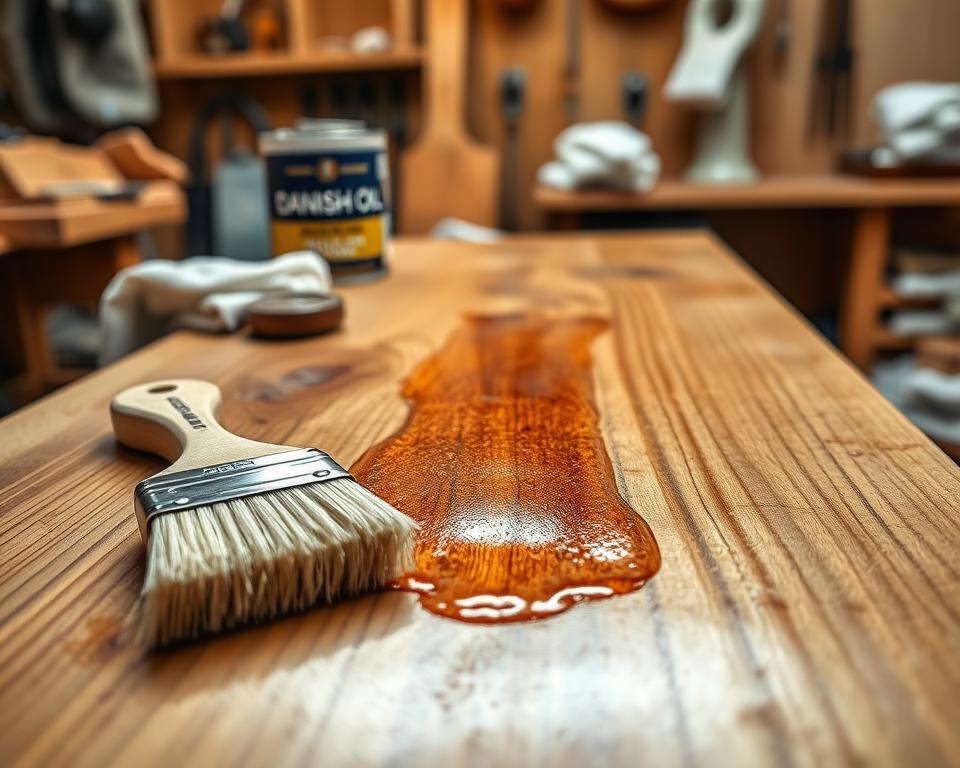
Uneven application is a common problem with Danish Oil. To fix it, lightly sand the affected area with fine-grit sandpaper. Then, reapply Danish Oil as the manufacturer suggests, keeping your application even.
Dealing with Dust Contamination
Dust can be a big problem when using Danish Oil, more so in dirty environments. To avoid dust issues, apply Danish Oil in a clean, dust-free area. If dust settles on the oil, gently wipe it off with a tack cloth or soft brush before it dries.
Repairing Over-application
Too much Danish Oil can make your finish sticky or uneven. To fix this, use a clean cloth to blot the excess oil, following the wood grain. If the oil is dry, you might need to sand it lightly and apply a thin layer of Danish Oil again for an even finish.
By knowing how to tackle common Danish Oil problems, you can ensure a successful application. This will give your wood projects a beautiful, lasting finish.
Caring for Wood After Applying Danish Oil
To keep your Danish Oil-finished wood looking great, regular care is essential. This care helps the wood stay strong and beautiful in your space.
After using Danish Oil, your wood is protected and looks better. But, it needs regular care to stay that way. Regular cleaning is key to stop dirt and dust from harming the finish.
Recommended Cleaning Methods
Cleaning your Danish Oil-finished wood is easy. Here are some good ways to do it:
- Dust regularly with a soft, dry cloth to stop dust buildup.
- For deeper cleaning, use a damp cloth with mild soap. Stay away from harsh chemicals or rough cleaners.
- Make sure to dry the surface well after cleaning to avoid water spots.
Tips for Reapplication
As time goes by, the Danish Oil finish might need to be reapplied. This keeps the wood protected and looking good. Here are some tips for reapplying:
- Check your wood surface often for signs of wear, like dullness or dryness.
- Apply Danish Oil again when needed, usually every 1-2 years, depending on how much it’s used.
- Before reapplying, make sure the surface is clean and dry for an even finish.
By following these easy care and maintenance tips, you can enjoy your Danish Oil-finished wood for many years. Regular care not only keeps the finish looking good but also brings out the wood’s natural beauty.
Comparing Danish Oil to Other Finishes
As a woodworker, I’ve often compared Danish Oil to other finishes. I’m here to share my insights on their pros and cons. Choosing the right finish is as important as picking the right wood. We’ll explore how Danish Oil stacks up against other popular finishes, helping you decide for your next project.
Danish Oil vs. Polyurethane
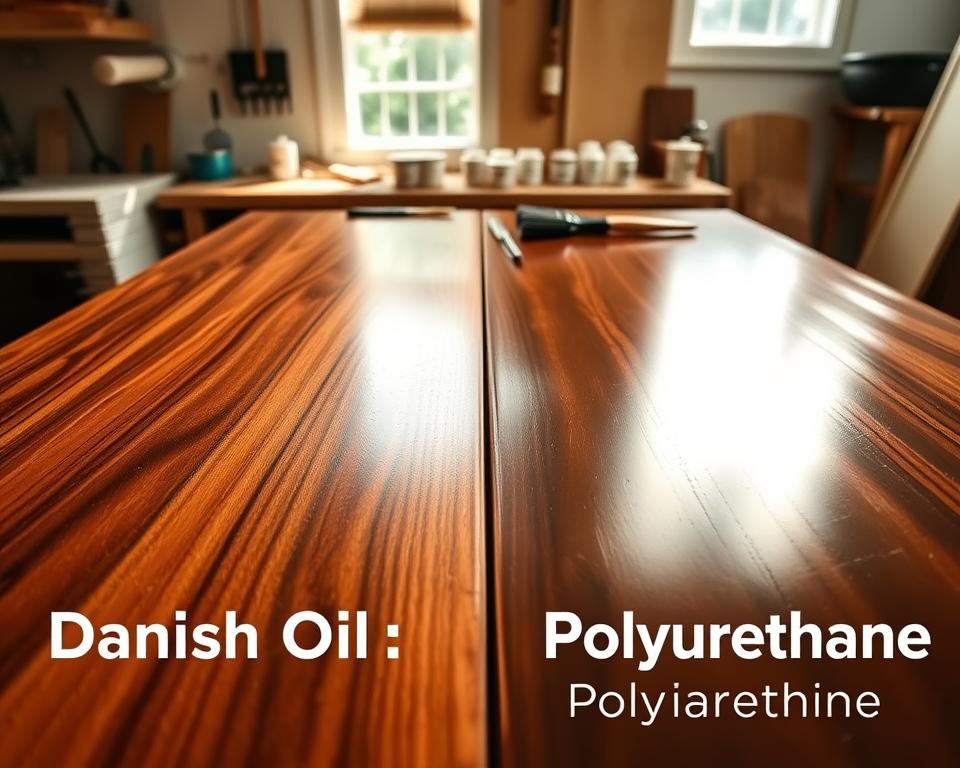
Danish Oil and polyurethane are often compared. They both protect and enhance wood but differ in application and finish. Danish Oil goes into the wood, improving its color and grain. Polyurethane, on the other hand, forms a protective layer on the surface.
Polyurethane is more durable and good for areas with lots of use. It’s also better at resisting scratches and fading. But Danish Oil is simpler to apply and fix. It offers a natural, subtle look that many woodworkers like.
Danish Oil vs. Linseed Oil
Danish Oil and linseed oil are both oil-based finishes. They nourish and protect wood but differ in characteristics. Linseed oil, made from flax seeds, takes longer to dry than Danish Oil.
Linseed oil gives a deep, rich finish but requires more coats and time to cure. Danish Oil dries faster and works well with fewer coats. Yet, linseed oil is seen as more eco-friendly, making it a natural choice for some.
In conclusion, picking between Danish Oil, polyurethane, and linseed oil depends on your project and preferences. It’s about finding the right balance between finish and durability.
Natural Variations in Finish
Danish Oil makes each wood project unique by highlighting its natural beauty. Every time I use it, I see how the wood’s species and characteristics change the finish. It’s amazing to see how different woods react to Danish Oil.
How Wood Species Affect the Finish
Wood species have their own grain patterns, densities, and colors. This affects how Danish Oil is absorbed and the finish it produces. For example, oak and teak have strong grains that make the finish rich and textured.
On the other hand, maple or pine might give a smoother look. It’s important to know these differences to get the finish you want.
Choosing the right wood and applying Danish Oil correctly can really bring out the wood’s beauty. It’s all about understanding how different woods respond to the oil.
Understanding Color Variations
Color changes are another thing to think about with Danish Oil. The oil can make the wood darker, but how much it darkens depends on the wood. Walnut gets much darker, while cherry stays lighter.
To see how different woods react to Danish Oil, let’s compare:
| Wood Species | Natural Color | Color After Danish Oil |
|---|---|---|
| Oak | Light to medium brown | Rich, warm brown |
| Maple | Very light | Slightly amber |
| Walnut | Dark brown | Very dark, almost black |
Knowing how Danish Oil works with different woods helps you choose the right one for your project. This way, you can get the finish you want.
Frequently Asked Questions (FAQ)
We’ve put together a list of common questions about Danish Oil and their answers. Whether you’re experienced with woodworking or new to DIY, knowing about Danish Oil can greatly improve your projects.
How Long Does Danish Oil Last?
Danish Oil is very durable, but its lasting time varies. It depends on the wood type, the environment, and how well you maintain it. Usually, a good Danish Oil finish can last 5 to 7 years indoors, where it’s not too busy. But, if it’s outdoors or in a busy area, it might need to be reapplied sooner.
| Condition | Average Lifespan |
|---|---|
| Indoor, low traffic | 5-7 years |
| Indoor, moderate traffic | 3-5 years |
| Outdoor, exposed to elements | 1-3 years |
Can I Apply Danish Oil Over Paint?
It’s not best to put Danish Oil over paint. Danish Oil is meant to go into the wood to make it look better, not just sit on top like paint. If you want a clear coat over paint, use a water-based or oil-based polyurethane instead.
Is Danish Oil Food Safe?
Danish Oil is usually safe for food surfaces, like cutting boards and utensils. But, make sure to follow the maker’s instructions and let it dry completely before using it for food. Also, some brands might say it’s safe for food; always check the label or ask the maker.
Final Thoughts on Danish Oil Application
Applying Danish Oil can make your woodwork look amazing. It gives a professional finish that highlights the wood’s natural beauty. In this Danish Oil tutorial, we’ve covered the best ways to apply it, from start to finish.
Key Takeaways
To get a perfect finish, start with a well-prepared surface. Use the right tools and methods. We talked about cleaning, sanding, and checking for flaws before applying Danish Oil. By following these steps, you’ll get a smooth, even finish.
Share Your Experience
I’d love to hear about your Danish Oil experiences. Did you face any challenges or find special techniques? Your feedback is great for helping others in the community. Whether you’re experienced or new, your insights are very helpful.